Red Cliffs Of Dawlish

Red Cliffs Of Dawlish
Showing posts with label Argument Abstraction. Show all posts

Thursday, 16 June 2016

The Remain Argument: A Hollow Relationship Built From Empty Promises

At some point in time, too many empty promises that don't materialize or else "run out long ago" by spending "the stored good will" in others results in a requirement to change the relationship.


I think perhaps the above manages to symbolize, or capture or encapsulate all that the EU has become, perhaps regrettably and sadly?

  • Financially: The Eurozone/EURO Debt Crisis
  • Prosperity: The Unemployment Rates
  • Peace: The mixture of Terrorism and Immigration
  • Politically: The increase in lack of trust and confidence in politicians due to their constant failure of promises to voters.
  • Deception: The abuse of the terms of "goodwill": Peace, Prosperity, Global "Clout" or "Influence" by pooling sovereignty become their opposites and hence the relationship feels based upon a Deception.
  • Democratic Deficit: The failure to include people along the way towards "Political Union".
  • Empty Promises: Of "EU Reform" and "this this time it will be different" along with the avalanche of FUD and orthodoxy in the areas of society with their hands on the "levers of power" compared to other areas of society which may like to question more?
If you are a Remain advocate, I've tried to above capture some sentiments of a Leave advocate, the general "gut-feeling" that no amount more of rhetoric will do to "persuade" to change minds and vote Remain. The accumulation of the above into an overall feeling that "It's done" and "It's time to move on and break with this stale and empty relationship". All these reactions are how people deal with when a relationship feels as if it's not working and is dragging on too long, with too much negative consequence.

For almost all of the past two years, I'd argue as reasonably as I can, using the materials I've found most rigorous on both sides of the argument, mostly in fact from the affiliated sites on this blog such as: The Great Deception (WHAT?), The Harrogate Agenda (WHY?) and FLEXCIT: The Market Solution (HOW?). The basics of grasping a basic understanding via such questions on such a wide range of subjects within politics.

However, recently I noticed some appalling coverage in the news involving various acts of "terrorism". Here there is I think a combination of two ways of understanding the forces driving the question over our status as "A Member Of The EU":-
  • Identity
  • Relationship
I think in general the great problem with the idea of the EU is that it's effectively taken away control over the peoples' ability choose their identity and hence feel secure in their relationship: The most notable and visible example of this has been the great debate over immigration (Migration) as well as it's connection to the spread of terrorism or else other "atrocities" in Europe by people who are ruled by other ideas of identity that are not compatible and should have been filtered out more effectively.

I'm not making a new argument for myself here. But am pointing out that for many many people who don't know the arguments to a high degree, it is I think very understandable if they choose this form of argument and decide they "get control" back more if they vote Leave on this sense of identity and relationship with stronger controls or security over Migration Policy. Not only this, but the government does not talk "straight" to people: They code everything they say in political language which is frankly weird and hence likely unreliable. Given a direct vote to "tell" them how to behave/act, the choice is obvious. The threat of economic disaster is possibly an "empty on" or bluff: The government already suffers from economic failure not by it's own choosing and would point to economic success as by it's own hand for winning the votes.

This takes us to Remain arguments: What are they?

They are the same form on identity and relationship:-
  • International Relations eg "Global Top Table"; "Peaceful Unity in Europe",
  • Internal Relations eg "Good Friday Agreement"
  • Tory Internal Relationship dynamics: "Feuding Tories" ; "Tory Infighting".
  • Good People support Remain: Rowan Williams, Richard Dawkins, Ai Weiwei, Russell Brand, Gordon Brown, Amartya Sen, Tim Berners-Lee, Stephen Hawkins, Ban Ki-Moon... etc...
  • Higher Values: "Human Rights", "Interdependent World"
  • Big Challenges: "China", "Putin", "Globalization Threat", "A Modern Marshall Plan for Middle East and Africa", "Europe-Wide Challenge of Immigration"
On The Argument itself:-
  • UK/British public immensely ignorance on the EU.
  • Brexit is about Immigration only, a "jaundiced view of the world"
  • The UK COULD NOT TRADE in the Single Market without EU Membership
  • Brexit would be disastrous for the UK Economy and for the rest of the world, the stock markets, the pound and euro currency and house prices and pensions and a new budget would be needed. Jobs would go in their hundreds of thousands.
  • Admittedly "European Union is not doing particularly well at the moment..." but the alternative "Britannia ruling the waves" no longer exists.
  • Problems can only be addressed "together" and not "in isolation".
  • Britain/UK acts as a "balance" in the EU improving some of the weaker positions of France and aiding Germany to steer the EU towards a more economic EU than political.
  • Norway is totally different to the UK, therefore there can be no Brexit possible eg all the other models are "what Brexiteers want" but they lose what "we already have".
  • Britain would be sending out the "wrong signal" to the "global community" quitting: "A jilted partner has more reason for angst than an unapproached suitor".
  • Besides "policy changes" and "institutional reform" are what the EU needs not Brexit. The EU needs "solidarity".
  • "The EU was built from the rubble of two world wars and has ensured peace and prosperity for a generation of Europeans".
  • "Europe will be able to deal with Enormous challenges if it speaks with one voice."
  • "We live in an increasingly  interdependent and globalized world. No nation can afford to be too isolated."
  • "Scientists are not known for their conformity, but there i one topic on which the great majority agree: Being part of the EU is good for British Science".
  • "We want our country back" is a constant Brexit refrain. Yet many of the things that make our country great - the BBC, the NHS, the Post Office - are at most risk not from the EU but from the largely pro-Brexit right wing of the Tory party".
  • "Many of these pesky European regulations and directives, meanwhile, are designed to improve the quality of our air, beaches and animal welfare - imrpovements that our government often fights tooth and nail."
  • "If we do Remain, we need better (and better-expressed) ideas, not about "Britain and Europe" but rather about Britain engaging more constructively with Europe." (LOL!!!)
  • "Sovereignty is not something to be hoarded. It is an asset that governments can use nationally or in co-operation with others, issue by issue, depending on which appraoch is the most beneficial to their citizens. The question, therefore, is whether the UK is likely to benefit from continuing to link certain aspects of its sovereign power with the EU. Meanwhile the UK has retained Sovereign control over most of the matters of greatest concern to British voters."
  • "In an increasingly competitive as well as interdependent world, Britain will be better off pooling discrete areas of its sovereign power with 500 million fellow Europeans than leaving its population of 65 million beholden tot he rules and whims of others."
  • "Being a part of something larger than states and empires is a source of optimism and inspiration."
  • "I believe Britain should stay in the EU. The logical reason is that we need structures of alls cales to manage this planet, and there are a good manythings that are best done at the scale of Europe. The emotional reason is that it is somcuh more fun to embrace the fascinating mix of people, cultures and languages that is Europe."
  • "The EU level, though, is essential for us. There are a lot of regulations that may be boring and bureaucratic, but is it not more efficient to use the ones set by the EU, rather than for each country to make its own?"
  • "Trying to persuade people, especially the young, to vote in the Referendum on 23rd June."
  • "I strongly believe we are safer inside the Union".
  • "Gone are the days when we could stand on our own, against the world. We need to be part of a larger group of nations, both for our security and for our trade."
  • "We're flourishing in this open Unoin of ideas and talent exchange, and baffled by the desire to choose a parochial "Little England" rather than the bigger, richer, more generaous terrain of the EUropean continent.
  • "Europe for me means os mcuh more than economic union. It is about a gate opening on the world, the start of a great love affair with all things international."
  • "In case of Brexit, we call for urgent measures to retain the vital rights and protections created by the EU."
  • "The European project is about peace as well as prosperity; the EU creates a shared identity that encompasses and celebrates diverse cultures and understands the free movement of people as a strength rather than a threat."
  • "A European community, a European union, must be created to ensure tha another war between European nations would never happen. It was in effect, a declaration of peace and reconciliation."
  • "Is this European Union perfect? No. Is the bureaucracy so often absurd and wasteful? Yes. Does it have the democratic integrity it should have? No. But, does it, has it, helped to keep the peace? Most certainly."
  • "Making Europe into one place was the obvious intellligent reaction to two European world wars."
  • "We ought to stay in, get on with changing what needs to be changed and stop complaining about it."
  • "First, Europe, to me, does not mean a perfect institution; it is not faultless - but it represents moving forwards rather than backwards. Europe means achieving so many things through unity that we could not achieve in isolation."
  • I like to think that although therw will be inevitable political disagreements, we all want to bring countries - and therefore people - closer."
  • "We are connected in some way with our fellow human beings, and connection is good, especially now that the world has turned into a giant Wes Craven film."
  • "When Brexit advocates tell me that if the United Kingdom leaves the EU, the open road will remain open, I know they cannot guarantee that. Fundamentally, Brexiteers are asking voters to take a monumental gamble."
  • "For me, co-operation with our partners on th European continent and the restriction of the powers of our government is a positive, not a negative."
  • "Europe is not an elite conspiracy against the public: at its best, it is the opposite. It is about the solidarity of the peoples of Europe with each other and our determination to create a better, freer and fairer world."
  • "My granddad was an internationalist."
  • "I will be voting for Remain on 23rd June and so should you, if you care for the immediate health and safety of your friends and neighbours."
It's fascinating reading the "Remain" case. I don't believe it makes any difference to the Leave advocates concerned about Immigration: So many words and so little direct contact. What it does suggest is that these arguments are about Relationship and Identity also. But that they have put the ideas of these things BEFORE the arguments themselves and hence understanding why such "promises of building better worlds" don't turn out quite as expected or promised.

Perhaps the most dangerous Remain position is to characterize the EU as THE ONLY RELATIONSHIP that is possible and good. And by doing so preventing the temptation to vote for Brexit for a different relationship? This failure either because the EU is reality or else because any alternative cannot be reality (too dangerous!) is suggestive of a hollow relationship:-


So how should the EU deal with the UK itself? Many so-called Brexiteers have advocated leaving, but maintaining access to the single market. But German Finance Minister Wolfgang Schäuble (CDU) said just a few days ago that he is not in favour of such an arrangement and that the UK is either in or out.

There can’t be special treatment for the UK. Brexit would be a huge cost to the country; the British would have to pay to leave the EU. But, of course, we would still need to continue our relationship with the UK, which is our neighbour and a country that has been in the EU for some four decades now. What status does the UK want and what would the remaining 27 be likely to confer on it? At the end of the day, the decision to leave will have to be accepted by the other member states and the European Parliament. It’s still unclear how that would actually play out.

The best case scenario for them probably is the Norwegian model: the UK would continue to enjoy access to the single market through membership of the European Economic Area, but would still have to pay for that privilege, as Norway does. But with this, the UK also takes on the same rules, like the principle of freedom of movement. That would probably be the main stumbling block in the negotiations.

CONCLUSION:

If Arguments had been promoted more thoroughly and fairly, more people would have ended up less confused than they already exhibit. That is to say, the result always was going to be about RELATIONSHIP continuing either way and if people had learn the actual arguments instead of willing the results to come first such as clinging to safety of relationships known (EU) irrespective of it's quality, and secondly more Vote Leave morons had understood this too about a staged withdrawal such as EFTA/EEA aka "The Norway Option", then this Referendum might have had to deal with far less emotional digestion and concentrated on more mature democratic participation in action - a positive result either result: Remain or Leave.

The fact Remain denied there was a future alternative relationship possible, is potentially the most useful error of that argument's proponents. Any relationship suggesting such is no real relationship to build the future upon, I would argue?

An example of the childish confabulation of Remain Arguments is this article Which would you rather, President Trump or Brexit? It’s no contestJonathan Freedland which shows so clearly how the childish conception of taking elements that it wants and elements that it can see and concocting a mixed up communication of an event to the adult patiently listening (sometimes with amusement!):-

"Words Will Work If We Will A Better World Enough." ~ Remain in the EU
I don't agree at all no matter how much propaganda is used.

Sunday, 12 June 2016

RELATIONSHIP: The Central Point Argument of the EU


Why did the EU SUPRANATIONAL RELATIONSHIP Form?

There's a good summary here from EUReferendum.com: EU Referendum: remember Verdun. In The Great Deception we learn the names of the core, original architects of this idea for "the subordination" of nation states in Europe under a "United States of Europe" Supranational government:-
  • Arthur Salter
  • Jean Monnet
Subordination:
"When these two men first conceived their dream of a "United States of Europe", absolutely central to it was the prospect of setting up an entirely new form of government: One which was "Supra-National", beyond ["above"] the control of national governments , politicians and electorates. Nation states, governments and parliaments could be left in place: But only so that they could gradually become subordinated to a new supranational government which was above them all."
  • Altiero Spinelli
Deception:
"Altiero Spinelli realized that to bring his vision  about, it would be necessary to conceal from the peoples of Europe just what was being done in their name until the process was so advanced that it had become irreversible."
  • Paul Henri-Spaak

Engrenage:
"the most effective way to disguise the project's political purpose was to conceal it behind a pretence that it was concerned only with economic co-operation."
What I'd like to highlight: The reasons as per Verdun were "good intentions" to avoid bad relationships leading to millions of deaths in wars. However the means to achieve this objective, the forms decided upon:-
  • Subordination will lead to an abuse of power.
  • Deception will lead to broken communication between "elites and people".
  • Engrenage priority will lead to putting this Relationship over Reasoned Argument in Policy (for example see Fishing Discards below).
What we can see is the intention is good but the exectuion is negative and it's because of the relationship that was at the heart of the design which itself had to work through negative methods and hence it has become a negative or destructive relationship structure.

The evidence of this Relationship (As IT Relates TO and is Being Related FROM) in action vs the Technical  argument (IT Itself) being subjugated is exemplified in Fisheries evidence:-

Fish, Fisheries = IT ; UK's relationship with the EU and the EU's relationship with the UK = (it) RELATES TO/FROM

To Summarize from Owen Paterson's Fisheries Speech:-

Re-establishing Local and National control of fishing policy will revive our fishing communities and restore our marine environment. 
If anything it has got worse. 

"Eleven years ago I produced an Opposition Green Paper on fishing in which I stated that ‘The Common Fisheries Policy is a biological, environmental, economic and social disaster; it is beyond reform. It is a system that forces fishermen to throw back more fish dead into the sea than they land, it has caused substantial degradation of the marine environment, it has destroyed much of the fishing industry, with compulsory scrapping of modern vessels and has devastated fishing communities’. Despite determined efforts to reform the CFP by the UK Coalition Government, not much has changed. If anything it has got worse. 

The statistics are eye-watering

In 1995, 9,200 British fishing vessels landed 912,000 tons of fish; by 2002 there were 7,003 vessels landing 686,000 tons. That is a 25 per cent decline in just seven years, and meant the loss of on average one fishing vessel per day. A whole crew losing their livelihood each day.In that period landings dropped from over 900,000 to just 627,000 tonnes annually, with a value of only £770 million.  But the real contrast has come with imports. By 2012, by which time there were just 6,406 British fishing vessels at work, UK imports reached 638,410 tonnes, valued at £2.6bn, of which just under a third came from our EU neighbours. To make matters a great deal worse, many of them were caught in British waters."


How did this happen?
 

How did this happen? Politics. Access to fishing grounds has been dominated by political considerations, on the basis of ‘equal access’ to what Brussels called a ‘common resource’. When we joined, fishing fleets from other EU member states were given proportionately a greater share of the fish allocation in UK waters than the British fleet.  This ‘Total Allowable Catch’ was determined annually during a seedy bargaining session in Brussels.  We can’t say we weren’t warned. 

When Britain, Ireland, Norway and Denmark were negotiating to join the Common Market it was realised that 80 per cent of the EEC fish stock would now be in the internationally recognised ‘Exclusive Economic Zones’ of these four new member states. The Norwegian fisheries minister resigned rather than accept the deal, and when given the vote on whether to join, his countrymen sensibly said ‘nei’.

Effect on environment 

Considering this devastating effect on the industry, it’s almost an achievement that the Common Fisheries Policy has also managed to be an absolute ecological failure, too.
To Visualize the different arguments and the effect of this "new" Relationship on Fisheries Policy:-


Why overfishing?

Contrary to there being ‘too many fishermen chasing too few fish’, as the European Commission concluded after studying its own failures, the problem is caused by management in allowing overfishing for political reasons.

In the previous blog, Intermission: How To Argue About European Union Membership Effectively, it was looked at how to argue effectively to a general audience this message about the Central Point of the Argument about the EU as per Roland Smith's EU Referendum: Read The Question! and it needs to be reformulated in simple language that is undeniable: It is a question of Relationship Status of the UK with the EU and the merits of this status compared to a new relationship status such as:-

Explosive poll shows that the public back leaving the EU and remaining in the Single Market ~ Ben Kelly (The Sceptic Isle)


Far from in fact "selling the EEA" for it's "wonderful properties" which the Remain supporters are so desperate to contradict and step over the line into:-
  • Lying
  • Black-Naming & denigrating
  • Manipulating via Authority and Prestige sources
  • Not answering the question ie Mischaracterizing
ERM & Maastricht (Eurozone) "Economic Uncertainty" unleashed by John Major; Iraq War and Mass Immigration "Political Terror" unleashed by Tony Blair. Whether or not you like Nigel Farage the demagogue, he's the creation of both of these former Prime Ministers and their deep deep deceptions over the British people. The Deception is bigger than all the personalities and their declining prestige.

One of the worst mischaracterizations is from David Cameron's Immigration broken promise of <99,999 p.a. promise after his "Cast-Iron Guarantee Referendum" broken promise and then manipulation of the Referendum via his "Special Status" Dominance-Subordination discussions with the EU as Pete North notices: A matter of trusting David Cameron...


There's a simple truth here: The EEA is not about it's "Pros" in the first case and hence it's not about Immigration (The EU Question) either in the first case:-

The EFTA/EEA Transitional Brexit solution is effectively answering the FIRST Question of Political EU Union Membership and removing that FIRST!!!! as perahps both Lost Leonardo A Step Into The Light and The Brexit Door Transition (EEA) Unites Voters, appreciate.

The Three Body Problem of the UK's EU Relationship


Failure of uptake of The Great Deception seems to come about because of a lack of democracy. But only a rise of democracy seems possible to lead to an uptake of The Great Deception and hence determination to trigger the need for The Market Solution.

As much as my colleagues are positive about the recent reactions to the EEA, underneath I think there's this "3 Body Problem" (to nick from science: N > 2, the N-body problem is chaotic).

I think what needs to happen is to create more means and methods for Direct Democracy that by-pass a lot of the current news-media (see Scribblings From Seaham: The ‘pot-mess’ in which the UK now finds itself) and political bubble of SW1/Westminster politics (see ME Synon: How Cameron and the Commons will overturn a Leave vote) with more public <-> public (Mr. Brexit) debate and discussion generation.

This Referendum is a real result of this, any potential outcome Remain or Leave I think will be due more to "chaotic" factors!


"Booker – like many observers - is getting increasingly fed up of what he calls "this claustrophobic referendum campaign". He is by no means alone.

Lord Ashcroft's focus groups are reporting increasing frustration, where many people's perplexity over the decision at hand is turning not into enlightenment but exasperation. Among the many words people used to describe the contest so far ("unreliable", "unrealistic", "uninformative", "not that interesting", "unnecessary", "a quagmire", "a lot of bullsh*t"), by far the most common was "confusing"."

Booker rightly observes that a "1-Body Problem" is very very very simple to answer for people (UK Unleashed) as opposed to this "3-Body Complexity" issue due to a lack of Direct Democracy operating in our politics. And that is the Central Point of the Argument: EU Political Relationship. The seeming obvious fact that all the most praised Remain positives of this Relationship are the UK's current "Opt-Outs" is or should be a minor epiphany of the poor logic of this relationship.

Thursday, 9 June 2016

Intermission: How To Argue About European Union Membership Effectively

Planet of The Apes: An exemplar of a time and place shift in the meaning behind the story from the audiences' expectations and understanding until this final frame.

In this blog I've deployed a couple of devices frequently:-
  • Uses sets of 3's (people generally manage up to this number)
  • Using an alternative subject to lead into the political subject of the blog
  • Frequently using a non-linear association of themes and topics; effectively providing information in a form for curiosity building (attempt at).
  • The title above refers to "effectively", which is just how such titles are written and hence expected...
I don't have the discipline nor knowledge depth on a lot of the subjects to produce the high quality of other bloggers. But I think it is possible to be able to use "Thinking Tools" to help people consider the subjects more effectively and that's what I've mostly attempted to do, most of the time.

This blog, is going to carry on this "method" about "arguing about the EU with people effectively". But it will also build on the previous sequence of blogs I've been building recently:-
  1. Decription
  2. Explanation
  3. Argument
  4. Perception
  5. Which Argument? Relationships (subjective orders of intentionality) or Technical (The plethora of regulations and standards that can be objectively studied)
  6. Using effective argument via story structure to a general audience.
  7. Using an exemplar of 5. (next blog after this intermission).
Ok, the above is a final scene from The Planet Of The Apes, and it is a bit more dismal than intended, but it's also very iconic as well as an optimal fit to explaining 6. above:-

A very different time, a very different place and a very different reflection of people - than previously believed.

In the story of The Planet Of The Apes, some spacemen blast off into space and something wrong happens. They then find themselves crash landing on a mysterious alien planet, ruled by Apes who are developing their own civilization. Anyway after some adventures, in which the main protagonist believes the apes are still very savage animals despite their apparent mockery in emulating humans such as riding horses and wearing clothes; he stumbles across the above beach and a realization overwhelms him: The alien planet is in fact Earth and what has happened is that the spacemen have travelled in space and arrived back in the future many many years later. What the Statue of Liberty represents is that humans obviously suffered a thermo-nuclear war or holocaust and set back their civilization by millenia in which time apes had evolved separately and started to assume the civilized role on the planet with humans reverting to the more "savage and primitive species" after their fall from grace.

Now that's a fascinating bit of sci-fi, but the structure of the story that witholds this crucial information while subjectively we believe the "good" protagonist, Charlton Heston's character is right about the Apes: They're the cruel savages, not the poor humans! And then "Bam!" that story is turned upside down.

So it is with describing the EU then explaining it then arguing about it BEFORE you've even got to the stage concerning Brexit.

Instead most people are stuck in the mindset of the character of Charlton Heston, they can ONLY go on their own standards and what they see and hear all the while befuddled by the politicians and news-media's output. And hence if you are familiar with the two different versions of the EU story, the "External" out in the Open one and the "Internal" underground one you can tell which story is being told by people: The mirage vs the one based on research and factual historic findings ie the real reality.

For example some of the "savage things the Apes talk about":-
  • German Cars!
  • The EU will kick out Ex-Pats if we leave!
  • 350m£ cost of EU!
  • Immigration is the only real reason to leave!

 A good place to start: Knowledge of the beginning of the story is needed to make sense of the middle of the story then the end of the story.

So, here's my recommendation: All this is the stage where people are attempting to arguing about Brexit (remain or leave) and little do they realize that it's like they have been given some frames of a few seconds from a film/story that is well over 4 hours in length and those frames are perhaps in the middle of the film jumbled up!

You're going to "fill in the gaps" in the story relying only on what you already think you've seen and heard and hence accorded with what you'd prefer to think the story ends like (most likely according to your own personal temperament!)!

What people really need is a beginning and then a middle and then an end to the story and then give that overview to them, then let them talk about their "memes" above and insert those frames in the right portion of the story and hence add the relevant context which then changes those memes meanings and may then finally help people perceive things more clearly...

In fact I've been doing this and people struggle but they are mightily curious like solving a puzzle or working out more and more of this increasingly interesting story. They'll still put up resistance to the "Charlton Heston Moment" however!!! ie changing their minds!!! But that takes a lot more time: It's emotionally impactful arrival.

But what I've found incredibly useful is to position beginning at the beginning with the story and most if not all of that knowledge I've found in The Great Deception. Often if a listener asks a question, it's necessary to "rewind" to somewhere within The Great Deception "His-Story" point out the genesis, invariably a political motivation concealed (hence deception in the title) and then "fastforward" to the present "meme" frame and re-explain how it fits into the story, bearing in mind the listener little realizes they're still on the side of the humans (the propaganda version of events) and think the apes are savages (the actual context). For example people who say the UK is too overcrowded and immigration must come down or be stopped, it's very tricky to tell people how Migration fits into the story in it's correct connected and coherent place, first some backtracking then some explanation of the middle of the story which means that in fact the solution is to "park" Freedom of Movement as it's only a component of the full composite of Migration! But you can start improving that by voting Leave at least.


Finally for a decision that is supposed to shape the next 10yrs of our political lives, very little thought and commentary has been given to the "ending" of our story namely Globalization. And if you can manage to talk about the Middle (FLEXCIT) and steer people towards reframing from EU (Political Relationship error) towards Globalization (the technical revolution above the EU) and then I think it is possible to provide people with a puzzle where they can start to work it out more and more for themselves and feel satisfaction at doing so instead of the confusion of butting heads with those that disagree with them over those memes (stuck in the middle arguments).

The 3 components of Knowledge to bread it down (or in story form: Beginning-Middle-End):-
  • The Great Deception
  • FLEXCIT: The Market Solution
  • Globalization of Technical Regulations and Standards (we don't seem to have a fancy name for this yet!!)
If you are going to be able to argue effectively and recreate the story for people to learn from you have to possess the knowledge from these. You'll find great interest in the history The Great Deception, you'll find a lot of resistance in FLEXCIT (the present because people don't realize they're merely actors within a larger film itself measured by variable time frames (eg General Elections 5yrs, EU Treaties 9.x Years av., generational change in decades) and then you'll find a huge amount of bafflement about the "ending" but providing people with this alternative and "what might happen in the next bit of the film"... it is helpful to resolving being stuck in the middle part of the film (this referendum).

I'm very convinced this is the useful way to argue, for a number of reasons:-

  1. I've successfully used it and observed the reception and reactions of people using these materials (mainly from EUReferendum.com , The Leave Alliance, The Blogger's Army (see side-bar)). Hence I can report on whether or not it works and in what way it does work and gauge some measure of that all important "Emotional Digestion" in people.
  2. I compare it to what is churned out on TV and in Books and otherwise, for example:-
 Challenging To Use: Mostly Unstructured and Semi-Structured Information

 Disconnected and extremely variable quality of information mixing in high proportions of misinformation


 Tim Martin (Wetherspoons EU Referendum Special Magazine): Sources Politicians rhetorical arguments with low structure of information and often poor research of details. Martin's is usefully around The Central Point Argument of the EU Membership Question but could be much more powerful structured as I've suggested above.

Once you have this "full story structure" from research in place, you can see that the means and methods and mediums of information of politics delivery to people in the UK is incredibly "primitive" (Planet of the Apes reference!) for the purpose it's set out to produce: Informing and educating and enhancing national democratic debate and argument to reach national decision-making on the past 40+ yrs with a view to at least the next 10yrs for the UK's Membership of the EU or it's alternative in an increasingly globalized and changing world.

Pete North is worried about where democracy will go if we vote Remain: What scares me most if we vote remain.

It's merely a symptom of the poor ways in which the UK carries out it's so-called systems of democracy and hence the poor results that are more likely to follow or by chance sometimes not! Correcting how we go about doing democracy may help. Assuming the same old channels of communication work or are adequate may be a barrier to more political progress that itself may open up more progress in other areas?

 A Map Argument (or decision-tree flow argument): One of my previous attempts to structured information. "Story Structure" in this blog is another attempt for use in verbal arguments to coordinate WHERE/WHEN/WHY which need to precede HOW in peoples' understanding of the story and that leads to eveeeeerybodies' favourite in politics as evidenced on tv and radio talking-heads: WHO (the least important perhaps?)

I have not checked, but The Great Deception is ripe for Radio Serialization with a story structure and mild editing to ensure it's read at a brisk pace, which matches modern audiences' current "More Salt!!!" taste buds in how they prefer their information to taste!!

Why so so many so-called "experts" on this subject fail to mention it and begin the story at the beginning... or even appreciate the full range of Brexit papers categorization in the middle let alone that "Globalization" future. For 40+ years the public has listened to their attempts at politics on the EU and it's been mostly a complete waste of the UK's potential capacities for collective action and energy.

Perhaps one of the biggest arguments against political elites in charge of large decision-making exclusive of people: The history of the UK's Membership of the EU.
 

Wednesday, 25 May 2016

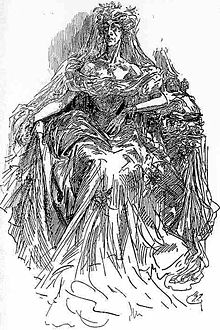
Confused? Don't Be: Consensus Now! Contrition Much Later.

I may have misread the artist's intention here, but this is the nearest I could find to illustrate the targeted emotion of "Contrition". (Incidentally an emotion that I think is displayed a great deal more successfully in Japanese Anime than in Western animation which seems closer to some version of "humble-brag" and hence inferior storytelling execution and design for the viewing by children).


In our arguments, on such a complex and large subject as EU Membership, we deal with subjects that are not a question of complete exactness. As such the details we input into our arguments are mostly not a question of completely verified facts or figures though constituent parts of those arguments should/must contain as many of these as possible or as few of their opposite as possible). And so it must follow that any conclusions from results that analysis adn research allows, cannot equally be completely validated.

This then brings us into the realms of political consensus to dictate our decisions we would take once democratic discussion has operated on the above.

However, there is still a sequence:-
  1. Identify The Problem
  2. Narrow Down The Solutions Possible
  3. Interpret The Consequential Outcomes
If you are at all familiar with EUReferendum.com for the past so many years, this is exactly I would say the work that has been (again I would say successfully) carried out there. Today's blog by Dr. RAE North, EU Referendum: the lack of a plan very much retrospects on that work (indirectly) point out because it has NOT being incorporated by either Aaron Banks or Dominic Cummings and hence why this is a mistake for the present Referendum campaign commandeered by Vote Leave:-
"But the alarming truth is that they probably can't. To win this referendum, we had to get in first and pre-empt the scare tactics, laying a solid base of reassurance. Thus, the moment Dominic Cummings, for no good reason, rejected the idea of an exit plan, the leave campaign's fate was probably sealed.

We might possibly have been able to claw back from this huge error if Arron Banks had been a man of his word, and backed Flexcit as he said he would. He would also have had to have been successful in seeking lead designation for the "leave" proposition. He was our last chance, and he failed.

For an excellent review of where we could have been, Andrew Stuttaford's article in National Review is the place to be, especially as he makes the point that we have been pursuing the idea of an exit plan for years, only to have been ignored for several and different reasons.

Asa Bennett helps by making it clear that Vote Leave's refusal to adopt and exit plan – any exit plan – was never personal. This was a function of the flawed logic and ignorance of Dominic Cummings, the progenitor of a failed strategy – and also the craven response of the people around Cummings who never had the courage to rein him in.

The result has been a train-wreck campaign."
Why did these people not use the work that had already been laid down? In their own pockets of supporters they decided variably that (2. Narrowing down the solutions possible) would lead to a loss of consensus amongst different groups: For Leave.EU/GO that meant the "anti-immigration" supporters. For Vote Leave that meant the Top Echelons of the "eurosceptic aristocracy" and their dysfunctional dynamic would not permit such.

So in this Consensus Activity without "2." we cannot break through the message to "3. Interpreting the Consequential Outcomes or indeed Conclusions" and hence "Uncertainty, Could & Consensus" and all pundits leaning on the findings of the Biggest Consensus" discernment possible from polls, from various groups of identities:-


It's not only the above who are famed for their prowess in lying. It's also groups of economists and their famed prowess for poor predictions:-

Economists deserve to be ignored

Brexit could add two years to austerity, IFS says

Brexiters’ insouciance is the privilege of the rich - Free FT piece

Only 27% of voters think Leave campaign "credible and trustworthy", down 10% in week.

The Treasury warns of a “do-it-yourself” recession after a Brexit vote

Leaving the European Union would be a “major mistake” that would cost Britain in both the short and the long term, almost 200 economists are warning today. In a letter to The Times, 171 academic and 25 non-academic economists say that Brexit would ...
Economic Brexit? Consensus/Computer says: "Inconceivable!"


Be that as it may, we do actually have certainty about something: EUReferendum.com predicted all this >2/3yrs ago and longer. In fact, EUReferendum.com is the source of "Problem Identification" it then follows with the most competent and rigorous analysis of the "Solutions Possible" and follows on with 3.

So let's come back to the orginal problem for this political Direct Democracy Referendum process:-
  1. We cannot be completely exact.
  2. This does not however preclude the principles of working towards verification of facts and figures into our arguments to the highest confidence degree (peer review is not the same as consensus through conviction of the largest group of people or the most socially elevated).
  3. Hence our conclusions if we are to make predictions are to be considered with the most confidence towards validating our course of action in the subsequent outcomes of Remain or Leave.
But this is just to point out the obvious. What is the fundamental problem here in the actual process of politics, as opposed to working methodology for our information usage?

Education.

The information I think is very solid from EUReferendum.com. However the big problem is education. In fact this Referendum in 2016 premature it may be, it will act as the emotional consensus trigger towards a subsequent national contrition that is the release from the phony arguments freeing up space and putting people into a frame of mind where they DEMAND to learn more as opposed to react over-excitedly and in thrall to the habitual channels of communication of politics (juvenile quality) and we can see more mature methods introduced subsequently.

 What Happened? The shock of Brazil fans... ""this isn't supposed to happen to Brazil's national, football team.""

I might go further and say this Referendum, the more the FUD, The Economic Uncertainty is pushed by the Remain and Establishment groups in their consensus building the more this prestages the subsequent step of Education and the conditions that are needed to make this more possible than the past 2 years have suggested it has not been.

The need of people to learn I think will only be triggered after experiencing this contrition on a suitably mass and national scale. I think this because individual sense of contrition is different from when a whole group of people suddenly experience that they were all hopeless wrong or self-deceived in their previous impervious conviction of being right (especially being right together in such "sound" company!). That anime face I hope attempts to convey this "(collective) Oh Shit!" feeling.


So far the politicians and economists are paving the way. On the one hand, the UK gaining 10 years advance on this process could have been wonderful. But "could" as Remain keep pointing out is no good basis for arguments and ensuring we improve the quality of arguments in our national decision-making.

And this comes back to the second part of this blog, the first being the quality of arguments, the second being the quality of the participants of arguments: Namely people have to learn to elevate their own quality through mistakes and experience of making mistakes: This Referendum is at least conducive on that second part if not on the first part. The politicians and economists are purely reflecting this - which gives people an opportunity to see and experience their own limitations in contributing to real democracy and thus the narrow form it takes (exclusion) consequentially, by those big groups of consensus builders who effectively displace the widening of arguments by more contributions by more people.

To use a flesh example, when Brazil were thoroughly thrashed by Germany:

"This match, however, ended in a shocking loss for Brazil; Germany led 5–0 at half time, with four goals scored in a span of six minutes, and subsequently brought the score up to 7–0 in the second half. Brazil scored a goal in the last minute, ending the match 7–1."

I was not surprised: They had looked like a weak team riding their status for too long in achieving results while Germany had spent years of hard work building their team for winning the World Cup in 2014 (I think ever since England thrashed them back in the early 2000's 5-1 or something (2001)!). But you can see the shock and dismay of the fans above. At least losing so badly may lead to asking questions more seriously and hence identifying the problems more successfully.

Sunday, 20 March 2016

Discrīmen: Arguments have their own reasons


Energy transfer (radiation) from the Sun to the Earth involves decreases

The above is a useful starting point considering modelling the Earth's Energy Budget from the Sun. What we notice is that the solar energy involves losses in it's progression to the earth. We can discriminate these losses as illustrated leaving an approximate percentage of energy from the original that is "aborbed at the surface":-

Solar Energy that become "fixed": Some is used on photosynthesis reactions, some on respiration and the remainder on biomass (growth)

More interestingly, we can then look at the productive use of this energy in for example a leaf converting the solar energy into plant growth, which stores the energy in an organic form from which we call "primary producers" to which we can extend the decreases in energy as per the classic pyramid:-

Illustration of energy loss per transition

There's a clear separation or distinction where we can calculate loss of energy at each of the many stages in the relationship of energy transfer and hence ecosystem composition or total shape by proportion (energy or biomass).

Looking at the Latin Lexicon: discrīmen, discrīminis :-
  1. that which parts, an intervening space, interval, distance, division, separation
  2. [figuratively] a distinction, difference, discrimination
  3. a decisive point, turning - point, critical moment, determination, decision
  4. a decisive moment, crisis, peril, risk, danger, hazard
  5. a decisive battle


Unfortunately the results of google imaging the above and/or the english discrimination tell an entirely different story: One that is very emotive concerning the discrimination against people via forms of perjorative (negative) bias or prejudice which is of course sympathetic. Interestingly one of the most vile and frequent arguments against Brexit is that "it will piss off the EU / our European friends/neighbours": That to discriminate against them - will be a self-harming exercise by the British People, only the latest such moral blackmail by our former Prime Minister John Major:-


Major Moral Blackmail: "You are one sick, sick &%*!!!"

And this is indeed the big communication problem we experience today: Our Westminster Parliament is it seems to be more and more in the business of massaging emotions, egos; indulging in popularity and asserting prestige; the institution dares not appear to "discriminate" against different groups of people before our infantile-baby feeding Legacy News-Media throws a virtue-signalling tantrum on behalf of victims of "discrimination" of the decisions they have made on behalf of other people and via the offices of state to presumably coordinate society progressively.

This is a completely different industry to for example, The Laws of Thermodynamics:-
  1. First law of thermodynamics: When energy passes, as work, as heat, or with matter, into or out from a system, its internal energy changes in accord with the law of conservation of energy. 
  2. Second law of thermodynamics: In a natural thermodynamic process, the sum of the entropies of the interacting thermodynamic systems increases

 The Establishment

Here, the arguments have their own reasons. And I think the results are only all too obvious concerning the rise of the demagogue or populist who "apparently can reach the public" where so few in the decaying Miss Havisham-like Establishment cannot, such as:-


I don't mind Boris Johnson, he's more interesting than other politicians especially when he quotes some interesting passage or phrases from latin or otherwise and he often comes out with a funny turn of phrase. Boris Johnson the person I do not mind especially. But where I discriminate is the fact his face is plastered all over the Legacy News-Media instead of the actual Arguments themselves:-

The Market Solution: FLEXCIT Flexible Exit and Continuous Development ~ 

"A Dangerous Idea"?

I find that perhaps the ego of the person does not mind this. The popularity contest demands it. The baby-ification of British Culture is merely personified by one individual or a group of them. But when you have one side of the argument driven by a Serial Liar and the other side of the argument driven by a Personification of Political Infantilism of our culture:-


Amateurs are handing victory to the Remain camp

"The Leave camp have failed utterly to agree on a plausible, properly worked-out exit plan"

 Apparently all of Whitehall's major decisions are made by a coven of witches in Cornwall.

Given the one thing Vote Leave and Johnson fail to do is discriminate in their arguments in an adult and open invitation to argument and debate; especially Johnson who is able to blithely turn his arguments upside-down in imitation of other such "eurosceptic aristocracy" such as Ruth Lea, Boris Johnson, Daniel Hannan, John Redwood, Campbell-Bannerman, Nigel Farage and so many more political infants who will not make the hard adult choices of discriminating their arguments, to quote the fictional character Stannis Baratheon's reply to his servant Ser Davos in the fictional story A Storm Of Swords and:-


But only for those who CHOOSE to take the responsibility of adults, not act like political infants

My own opinion is that this one crack at Real (direct) Democracy is an exercise to correct the degraded process of "TO CONVERT (people)" into "TO DISCRIMINATE (arguments)". As said, "Arguments can have their own reasons" independent of popularity which indeed is ironically a form of bias. Winning an argument is not really winning a popularity contest, it's not really winning, it's merely selecting the current strongest argument from as wide an array of ideas and opinions as possibly sampled and implementing it until the next round of decision-making repeats the process! Ideas discriminate themselves best by references to ideas on the other side of the argument - if included so they can be actively excluded:-

Most old, stale eurosceptic arguments have to lose... that's their strength after they have first lost, to allow new, energetic Pro-Brexit arguments to win.

Sunday, 21 February 2016

FLEXCIT Application: 2. Fisheries Solutions

 Understanding the Solutions means understanding their context too: Under Supranationalism or Under Intergovernmentalism

Primary Source Material (the DNA):-

  1. The Common Fisheries Policy – Part 1
  2. The Common Fisheries Policy – Part 2
  3. The Common Fisheries Policy – Part 3
  4. The Common Fisheries Policy – Part 4
  5. The Common Fisheries Policy Part 5: Spanish Accession
  6. The Common Fisheries Policy part 6: The public swallowed the propaganda
  7. The Common Fisheries Policy part 7: FleXcit: Our fisheries’ future.
  8. The Common Fisheries Policy Part 8: Can we believe anything?
  9. Cameron’s deceit over sovereignty

1. The Solution Defined:-


Before looking at the potential Solutions if we agree that there are indeed problems:
"The Common Fisheries Policy is a biological, environmental, economic and social disaster; it is beyond reform.  It is a system that forces fishermen to throw back more fish dead into the sea
than they land, it has caused substantial degradation of the marine environment, it has destroyed much of the fishing industry, with compulsory scrapping of modern vessels and has devastated
fishing communities."

"Fisheries cannot be managed successfully on a continental scale; they need local control." ~
Consultation on a  National Policy on Fisheries Management in UK Waters ~ Owen Paterson January, 2005

Then we must establish the exact nature of those Problems, to which John Ashworth The Common Fisheries Policy – Part 1 provides the exact description of the rules of the EU, how it works:-

"When a Regulation is created, at the top it states the articles within the Treaty the regulation takes its authority from, and as soon as a Regulation comes into force, it in turn becomes what is known as the acquis communautaire:-
  • "The Court of Justice has ruled that the EU acquis takes precedence over national law if there is a conflict, and that the acquis may have direct effect in the Member States."


In understanding the workings of the then EEC, now European Union, the above paragraph is probably one of the most important aspects to have to learn.
Firstly – what is this acquis communautaire. -. It is all EEC/EU treaties, EU legislation -(regulation), international agreements, standards, court verdicts, fundamental rights provisions and horizontal principles in the treaties such as equality and non-discrimination. In short, all EU-law.


When Britain joined in January 1973, the acquis communautaire amounted to around 5,000 pages; today it is estimated to be 170,000 pages and growing. When a nation joins, what is now the EU, it has to accept, and comply, with the acquis communautaire in full, without exception, other than with transitional derogations. In addition the existing members have to all agree, to the applying Nation joining under those terms, which in effect the existing members, by Treaty, are endorsing their allegiance/compliance to the acquis communautaire."
 The UK joined the EEC in 1972 and has been a member of the EU for 44 years and a part of the acquis system above. Dr. RAE North in FLEXCIT: The Market Solution - 9.0 Regulatory issues provides a summary of the full weight of membership to this system for the UK:-
"In  this  event, the UK will be obliged to keep all Single Market  regulation in place. This  is an extensive body of law. From May 1992,  when the EEA Agreement encompassed 1,849  legal acts, by  December 2013 it had grown  o 5,758  legislative  acts, out  of  the 20,868  EU  acts  currently  in  orce (Table 3). By the end of October 2015, there were 4,957 acts remaining in force, with EU laws in  force recorded at  23,076. As a percentage of that number, the EEA acquis stood at 22 percent."

2. The Two-Step Solution Applied (I):-


"Since there would be no obligation to retain the remainder of the acquis, theoretically, leaving  the EU could  give relief from around 15,000 acts (although  by no  means all are  applicable to the UK). Amongst  others,  high profile policies such as the CFP and the CAP, would be amendable to abolition if there was the political will to do so, and the nation was prepared to accept the consequences."
 Of which, Table 3: European Union Legislation in force Fisheries Acts = 1,170.


Solution = transition or "bridge" between Problem and Outcome

If we look at our FLEXCIT model we remind ourselves what is the "problem" we are trying to actually solve. Is it economics? No It's political. We saw in FLEXCIT Application: 1. Fisheries Problems of Supranational membership. This is why "keeping all the Single Market regulations" in place is undertaken on withdrawing from Political Union.

The solution is as per Dr. RAE North in FLEXCIT:-
"To  allow time  to revise  our  law  books,  a  holding  process  will  be  needed.  The best option is to repatriate the entire body of EU law, converting it en bloc into British law (by a device similar to the ECA)"
 Hence the solution is to again quote John Ashworth The Common Fisheries Policy part 7: FleXcit: Our fisheries’ future.:-

"As far as the UK is concerned, the fundamental principle on which a policy should rest is that the fish and other sea creatures within the UK’s fishing zone of 200 mile/median line are the property of the nation as a whole. Custody of that resource lies with the central and devolved governments."

"The first priority, therefore, is that control/competence is returned back to Britain."
Here we have the solution, repatriation of the acquis does mean full "control/competence is returned back to Britain."

3. The Two-Step Solution Applied (II):-

This comes back to the quote above concerning removing Supranationalism to quote Owen Paterson Consultation on a  National Policy on Fisheries Management in UK Waters:-
"Since its inception, it has been dominated by political considerations that have had little to do with good fisheries management, so the decline and impending collapse of British fisheries has to be laid squarely at the door of the CFP."

"There is now increasing evidence that the reason for the failure is that the core regime applied by the CFP is irredeemably flawed, not least in terms of its appreciation of fish biology, the quality and interpretation of data, as well as the treatment of fishermen"
To come back to John Ashworth:-
"However, as far as fisheries are concerned, it is no good scrapping one régime in order to establish another equally bad system. Withdrawal presents us with a once-in-a-lifetime opportunity, to show what can be achieved in an area that contains one of the finest marine resources in the world."
John Ashworth: The Common Fisheries Policy part 7: FleXcit: Our fisheries’ future.
"But the distinction has been made, once we regain Sovereignty of a national resource, the full British Fisheries Industry scope is set according to International Law that allows Sovereignty to be clearly defined and not obfuscated under Supranationalism (which we see persistent examples of):-
An inshore industry could be built around the 0 -12 mile limit, which would have a beneficial effect on coastal communities through tourism, recreational fishing, employment and other ancillary industries. All could be administered locally."

"The offshore Industry would be based on the 12 to 200 mile/median line, and then you have the straddling stocks and reciprocal arrangements, which brings genuine friendship between fishermen of different nations. When other nation’s vessels fish in our waters they would do so under our rules."
What we see is that there is no "leap in the dark" there is a orderly two-step withdrawal that regains Sovereignty and removes Supranationalism. Remember that the Solution is not the Outcome, it's a bridge FROM Supranationalism TO Intergovernmentalism:-


 This simple distinction is not made by so much of the political commentary on this subject not just say on Fisheries but on Immigration or any other "Policy Outcome Aspirations". The process of transition itself.

What this solutions does not provide (Outcome) it does provide in terms of relief as per Owen Paterson above, relief from Bad Politics interfering with good fisheries management. It also will help provide a stronger scientific and technical basis for Fisheries Conservation, Sustainability and Recovery and hence a thriving industry administered locally by people who have a vested interest in it's welfare and their own. For example John Ashworth again summarizes:-

Two essential features are needed for a viable fisheries policy:-
  1. The first is the ability to be able rapidly to close areas down where juvenile fish are abundant. This has to be done within hours, even if the closure period may only last for a day or two. This ability to react quickly will never happen while our waters are under the control of Brussels control.
  2. The other important feature of any contemporary fisheries management is the use of selective gear, As a fishing gear designer I need to emphasise that the gear you design for one area is not the same for another area. Even if you are catching the same species, you need to make slight alterations to the gear. This level of adaption is impossible under the policy imposed by Brussels where one set of rules must fit the whole of a large area.
"You must have fishermen on side to make this work, but again, under the North/Paterson proposals, this is far more likely than under the current EU- controlled regime. The attitude it has engendered is that if I don’t catch it, some other foreigner, even though it is another EU citizen, will get it, so I will get in first."

"Personally, I am strongly in favour of the model used by the Faeroe Islanders which operates in a diametrically opposite way to the EU system of setting for each species a total allowable catch on an annual basis, often based on dubious research. In my view it is no good working from the top of the pyramid downwards. Research should be directed at the base of the pyramid upwards; starting with the food source. Once you know the availability here, you can calculate what can be sustained at the top. If for example you have a collapse of the base, you have to fish the top hard, the very opposite to what would happen now."

And on the problems in-built into the "DNA" of the Political "Ever Closer Union" Supranational EU:

"Ranged against us are those who don’t want the Nation State, and those reformists who either don’t understand the workings of the EU, or else who have a hidden agenda. If they really believed in reform, they would want to get rid of the principle of equal access to a common resource without discrimination. However, such reform is impossible because of the thinking behind the EU Common fisheries policy, which is incapable of beneficial reform along the lines suggested here as it violates the very principles of integration enshrined in the EU treaties which it was designed to promote. Unfortunately, so-called reformists never acknowledge this harsh reality."

"Leaving the EU per se is no solution in itself. It is only the beginning." ~ John Ashworth The Common Fisheries Policy part 7: FleXcit: Our fisheries’ future.
.

Abstraction of Solutions:-

 
  1. Member states must take up the full acquis communautaire under the terms of the EU Treaties.
  2. With respect to Fisheries this takes precedence over our own law as per the ECJ and with respect to the derogation of Fisheries we lose Sovereign Control of our Waters under "1982 Law of the Sea Convention".
  3. As we are removing Supranationalism, we retain Single Market acquis to trade with the EU via EFTA/EEA in the ideal settlement. This leaves possible scope for revision of the CFP acquis which is not part of the EEA agreement; ie Policy Control is returned. It also means the return of our Sovereign Waters.
  4. In the process of withdrawal we would repatriate the entire acquis simply to make the withdrawal and renegotiation expedient and avoid disruption to all economic activities.
  5. This would in the longer term however provide potential relief from EU legislation not part of the EEA acquis and secondly reform of various sections of the acquis itself such as the CFP.
  6. This itself is full Policy Control returned to Britain as well as relief from the maladaptive political interference of the EU under it's principles of "greater integration".
  7. It would also provide relief from the false arguments of EU Reform which by the nature of the rules are restricted in scope.
  8. This sets the greater scope for scientific and technical considerations in the management of Fisheries over "capricious Supranational politics".
  9. Clarification of Fisheries under International Law is a positive boon for our politics and how that influences the Fisheries success of management proposals.
  10. We can remove wasteful years of excessive "political maneuvering" by our politicians and EU officials to be replaced by practical and positive policy implementation that is measurable and accountable and comparative to good practices and the spread of high quality expertise and application over "political horse-trading".