Red Cliffs Of Dawlish

Red Cliffs Of Dawlish
Showing posts with label Christopher Booker. Show all posts

Monday, 27 March 2017

The Spectre Of (Real) Democracy


One of the most persistent considerations of Brexit has been:-


"JOBS"

I noticed this common and recurring theme in Pete North's blogs and his considerations and general feeling about Brexit post Referendum.

Yes, Brexit is a mess. So what?

"Just this morning I noted Theresa May announcing that the Swansea Bay tidal barrage "is part of our plan to deliver an economy that works for everyone and will mean £1.3bn of investment and 9,000 jobs". They haven't learned anything.

We are not a country that can piss money away on eco-vanity projects any more. We stopped being that country in 2008. The politics of binge and splurge to keep the plebs in make-work jobs is dead in the water. We want the fundamentals addressed."
"With Hinkley Point, the eye watering strike price is much the same as the Renewable Obligation Certificate scheme. An incentive to make a bad idea attractive to business. Rather than being direct taxation it effectively grants corporates a licence to raid our wallets through our energy bills.

Politicians love it because it notionally creates jobs - but that is a result of government spending, not foreign investment."
"And who does this keep in jobs exactly? Middle class engineering graduates. People who vote Tory/Blair. Effectively, since 1997 the UK national grid has been an elaborate corporate welfare scheme whereby the mug punters are obliged to fund the vanity schemes of politicians peddling their eco credentials." 
"Finally I would add how little I care. When I look at Nissan and Airbus I mainly see massive job creation schemes which have a history of taking big government money - largely as part of an industrial strategy to keep jobs in the regions. Though valuable they are a sticking plaster masking a more deep rooted economic decay."
"For a while I have has the impression that we are in a period of stagnation. For all the government's boasting of boosted numbers in jobs, there is an air of unreality to it all as people are shunted into insecure work and increasingly pushed into "self-employment". The fundamentals are not sound. The middle class is being propped up by massive government spending on defence and energy and soon HS2."

Considering I've only just tipped over 200 blogs, whereas this blogger has blasted past a huge number, it's one way to consider things from someone who has honestly put a lot of their energy, attention and time forming their work in this subject. Not only that, the great meme of the Remain campaign was for so long based on "3 million jobs!" (which itself has an interesting and mutating history).

Sorry Civitas, it's not ok to walk away

"We anticipated the usual remainer lie that three million jobs would be lost should we leave the EU. Our argument was that these jobs depended on trade, not political union. It was therefore necessary to show that we could end political union while maintaining favourable trading conditions."
'FLEXIBLE' + 'CONTINUOUS' + 'EXIT'


One of the core arguments in FLEXCIT was to anticipate the counter-argument based on FUD: Fear, Uncertainty & Doubt. A spectre of dread to so many people. Strangely enough this spectre looms over all the news broadcasts and all the agitation of people anxious about the outcome of the withdrawal process. Why?

Dr. RAE North's latest blog points out a summary of why: Brexit: back to darkness

"This (albeit limited) intelligence comes in a briefing from Alex Pienaar, head of EU exit policy for HMRC. He says that, "any form of customs controls will increase the costs to businesses and consumers of imported and exported products", adding that these costs "can be both financial and measured in time/delays".

What we have here is the first official acknowledgement of problems to come. And, in a separate piece, we also see recognition that: "the situation would be particularly onerous for those exporting food and other agricultural products into the EU with delays of up to a week for meat tested at official laboratories".
"As its worst, a botched Brexit could rival the Great Depression in its effects on the UK economy, returning darkness to the land. At its height, the 1929 depression cost the US some 30 percent of its GDP.

Destroying our external trade is as good a way as any to trigger an economic depression. Our Brexiteers seem determined that we should have one. Our government seems happy to give them one.

In FLEXCIT, this is precisely the scenario stipulated as first of all avoiding in our planning and secondly in our communication of such planning to people to vote upon.

To vote upon, via our politics. We've come full circle, in effect from prediction to fulfillment. All the while talking about the effect of our decisions on our jobs. A quick summary of the various sectors Dr. RAE North has been writing about tirelessly and assiduously demonstrates the shattering detail of this statement:-
  • Customs
  • WTO
  • Formula 1
  • Global Fraud
  • CETA & Meat
  • Duration of Trade Negotiations
  • Automotive Sector
  • Cosmetics & Standards
  • Border Inspection
  • Maritime Surveilance
  • Tariffs, REACH & NTBs/TBT
  • Elevator Business
  • Geographical Indications Standards (GI)
  • Digital Single Market
  • Medicines & pharmaceuticals 
  • Fishing Policy
  • Hazard Equipment Market
  • ........... [ list continues counting] ............................................
To quote the last listed bullet point:-


"At that point, he [David Davies] said, they were looking in detail at over 50 sectors and cross-cutting regulatory issues, a statement he was to modify on 2 February this year, when he claimed that the number of sectors covered had grown to 58.

On this blog, though, we've recently looked at 20 sectors and can see hundreds more that need to be considered, if the department for the UK's exit from the EU is only covering 58, then we're in serious trouble. One of those sectors which Secretary of State might have missed is the growing market for the very specialist equipment used in potentially explosive atmospheres, the so-called "hazardous area equipment" market."

There's in reality a lot of jobs involved by a lot of people within all these sectors. But what dominates so many people/voters attention is:-

It doesn't matter who wins the US election. The decadent West is in terminal decline ~ Christopher Booker


However, this spectre is an image, with a human semblance only seemingly ushering in to millions tremulous emotions. Much much more terrible in it's "titanic" true form in it's irresistible and implacable force and almost impossible to understand effect on turning people into "tiny cogs within a huge machine" (Adam Smith's "Invisible Hand" in other words) and where people spend so much of their lives' finite time: Fuelling our economies:-

One of the very interesting things right at the start of FLEXCIT:-

Our vision: The Harrogate Agenda

"Our vision is of a self-governing United Kingdom, a self-confident, free-trading nation  state,  releasing  the  potential  of  its  citizens  through  direct  democratic control of both national and local government and providing maximum freedom and responsibility for its people."

Isn't that what our economies were supposed to yield unto us? Progress, GDP, Consumer Goods, Trade?


Monday, 29 August 2016

Politics & Power: The Power Of "Will Power".

Dance music is one choice, but listening to these speeches before an exercise session might just be another choice to give the old adrenaline a booster?


I listen and read and think about the current "currents" in the legacy news-media and beyond, in other deeper sources of information on the current triangle between the EU, Brexit and the Referendum Campaign. The former two are indeed scholastic or intellectual. I think the Referendum Campaign was nationally hyper-emotional, and it's no surprise there have been reports of mass hysteria. Interestingly, I was watching some of the World At War Series as well as some of the series on World War I. These events that imbued the EU with so much of it's spiritual "guidance" as a matter of fact: Booker: the EU dies where it was born. I may have not mentioned it before but I am a great admiring of Booker's "book":  The Seven Basic Plots. Moving on: I think am right in saying get the feeling that during the 1930's Germany went through the various stages described so well by Booker: The Dream Stage and such deep tragedy, The Nightmare Stage subsequently. Booker has long used this tool of filtering events, and I think you can see in his latest piece it's correct application  (once again) concerning describing the leadership of the EU's reactions currently? Probably without stretching the theme too far, there's a draining away of will power about the EU... maybe.

Anyway, one of the interesting descriptions of Hitler's rise to power was his own powerbase was built on multiples of fractious groups only united behind a common cause or leadership on a very thin surface of support, perhaps a leadership with a great deal of "will power"? If you watch the clip (it seems slightly doctored to enhance the effect of his "hypnotic speeches" and the religious fervour they worked up in crowds of people) I think it's fairly evident that this is the effective message and promise Hitler offered Germany at this time? And the preceding details that created such an environment I think are easy to understand just how conducive they were to transforming the emotional state of Germany towards such a leadership outcome? It was all building all along.

As said, I listen, watch and read and think about the current situation and it's infernally complex and chaotic. There was a very interesting example of some of the emotions tumbling around about Brexit and the EU linked at EUReferendum.com in the comments:-


I'm not entirely sure how much of the above is a combination of emotional processing, pedestal pitching of emotions and other incontinent reactions. But there's some useful insights into how people are genuinely feeling and reacting to the dissonance of a result that is going to be difficult for them to apprehend given the build up of anticipation, expectation and the subsequent dissipation and negatively in this case. There's plenty of this sort of material all over the place. It also incidentally has it's corollary in the Leave supporters. What's tell-tale and this is repeated a lot:-
  • WHO?
  • HATE
  • FASCIST
Apart from the hilarious, unintentional joke about "I thought that would be America..." (!!). Most people are basing their reactions on the other side. For them the symbol of this other side (from the Remain perspective) is Haters which when given a political colour scheme becomes "Fascists!". We come full circle back to Hitler. And I think the myth begins here. The myth has taken over the reality (see: The Many Not The Few for a another (very different but still "Myth supplanting"). It's become a story about symbolizing "hate" taking control.

I think it's not this actually. It's much more accurate to consider it as a case of a beaten people in difficult conditions with all the usual fractious divides amongst so many people at such numbers, finding a political structure which pooled them together under the aegis of "Will Power".

If looking at the subject of the EU, there is The Great Deception. On Brexit there is FLEXCIT. But when it comes down to the Referendum Campaign there is none of this intellectual dimension. There's emotion and vying for groups and the politicians promising that "Will Power" will resolve all problems if only it is "lent" to them in sufficient number. And likewise, post-Brexit The Leave groups are all pomp and fanfare and prestige and crowing that Will Power is all that is needed for a successful Brexit. Coincidentally I believe this integrates into what Dr. North has suggested supplants careful reasoning: Brexit: the failure of feedback. When people are swept up in the tide of emotions outpouring from so many different groups, then the solution is will-power and any problems are grossly de-emphasized.

It's not just the UK, but the EU uses Solidarity which incidentally the Nazis also used of course. It's not that either political entity is "hateful" it's that they're both under the same pressures and stresses pulling in different directions in multiple ways, it seems to me. Inevitably the solution is always:-

"More solidarity/sovereignty, more EU/UK (or folk-strength), more will power!!!"

Could almost be a Hitler speech, eh?

I really want to get back to reading about Agriculture, Fisheries and the Environment, I've been collecting various bits of information. Considering all the above, there's so many different ways of talking about it, it ends up being the case that simply remaining silent is the best reaction, because it captures all the above without neglecting too much of it by zealously selecting only a small drop of this ocean of outpourings.

If there were more people more silently listening and considering more and then asking sensible questions about ordinary things some more, maybe the actual process of Brexit in light of understanding the EU (and it's deep origins back in history) might become a bit more apparent and a bit more of a priority, first?

Monday, 11 July 2016

Politics: Feeding the 46,500,001...


This info slide above describing junk food is possibly analogous to much/most of the news-media output on the political stories of the day. There does seem to be a social-circadian function to these stories that are "on the hour, every hour" so to speak, a collective rhythm to the day for peoples' establishment of their context to the world around them?

But if you're interested in more than this, then you may find that the quality of information is not very high for increasing understanding of politics apart from the more emotional stimulation and submersion socially within the constantly, ever-washing news stories.

The "good news" is that curated properly, there is a way to select (visibility problem) from this "roiling sea of emotion and excessive information":-

1. State of UK Politics


2. State of Brexit


Public Law for Everyone: Brexit | On why, as a matter of law, triggering Article 50 does not require Parliament to legislate


This sources will more than suffice for an entire week of political news-media at the very least, if spaced across an entire week for the weekly intake of news - at the very very least!

Tuesday, 10 May 2016

FLEXCIT: The Movie

FLEXCIT: A Holistic Argument


FLEXCIT THE MOVIE Intro by Christopher Booker.


FLEXCIT The MOVIE The Definitive EU Exit Plan Richard North Part 1


Richard North FLEXCIT THE MOVIE The Definitive EU EXIT Plan Part 2 


Richard North FLEXCIT THE MOVIE The Definitive EU Exit Plan Part 3


Sunday, 1 May 2016

Article 50: "Kept In The Dark" not "A Leap In The Dark"


The above is perhaps one of my favourite The Far Side cartoons by Gary Larson. I've done some TEFL work so it's satisfying in that context. I've also done some science, so the combination is particularly appealing to me.

In the above cartoon, the scientists are adept at measuring the sounds of the Dolphins and matching patterns of sound and repeated uses of such... but the enjoyment is the fact that all they really need but entirely lack is a sense of the Spanish language and then they'd be perfectly fluent in "Dolphin" who themselves appear to be the intelligent actors attempting to communicate to the "dumb" human scientists!

It might seem there's little application to politics directly, which is correct. But it does remind me of the strange situation where the basic or core rules of political process are not established and agreed upon perhaps by an "Electoral Commission" inquiry that asserts some "ground rules and factual foundations" for the campaign to proceed by... on either side of the Referendum process at large?

There's a very basic secret being displayed here in our politics, which our Dolphins above can help describe for us:-

A factual assertion of rules, opens up the logical legitimacy and indeed practical possibility, hence, politically of a fair choice either to Remain a member of the European Union or else to Leave the membership of the European Union.

If the rules were asserted and hence agreed, then the above knowledge would become "common knowledge", unexceptional and in fact ordinary: It would effectively cease to be a tool of power of politicians OVER people: It would radically be the gift of power in the hands of people.

What however we see instead is the replacement of this knowledge of these rules with the attempt to guide peoples' intuition towards ensuring any choice to Leave appears NOT to be based on any rules, but to be emotionally wishful or emotionally regressive or emotionally uninformed. It is beyond count how much this is backed up again and again and again in the prevailing politics, at present.

The Basis of All Propaganda: Even the smallest crack will allow the brightness of light to replace darkness and show the "way to the wider world"


But I think what is driving this failure to establish the fundamental rules, a spoiling motivation behind such a failure can only be deducted from such lack of sensible diligence to such a significant political decision-making watershed in the UK's history, is the dread of those who hold power to allow a glimmer of light to shine from behind the opening of the smallest crack of this Brexit Door: For this would allow the consent amongst all involved that it is possible to leave the European Union and to do so politically in a sensible and mature and responsible way.

And once that becomes a matter of fact, devoid of emotional energy and sound and fury, then it leaves space for: "What next?" And once that engine of decision-making starts moving forwards, I think there could be a substantial shift in peoples' attitudes and hence polling of confidence and expression of self-determination.

People want to know "What next?" it's so much more rewarding to know "What next?" and there is one way of achieving this: Choosing for oneself "What next?" and not allowing a small subset of warped politicians to choose for us instead and deprive us of this.


  • fears that the divorce would be turbulent
  • a polite way of saying that Britain could expect no favours from its jilted partners.
It's interesting that "fear-mongering" is a kind of common knowledge but it is commandeered by the politicians for their own agendas.

First the correct assertion of Article 50 is corrupted by CER using an increase in emotional pitch via "soap opera" language.

But this is reinforced by the Brexit likes of Vote Leave:-
  1. "Brexiters claim that this is all scare-mongering. Lord Lawson, the former Chancellor of the Exchequer, thinks that article 50 is another example of a Brussels diktat constraining sovereign member-states, and suggests that the UK could simply ignore it.
  2. Others still cling to Boris Johnson’s idea, now recanted, that a vote to leave does not have to mean exit, and that Britain could negotiate better terms for its membership than Cameron obtained. Brexiters are confident that the rest of the EU will have no choice but to offer good terms to the world’s fifth largest economy.
  3. And if that does not work, Michael Gove, the pro-Brexit justice minister, has said that Britain could threaten to block other European projects if the EU did not give the UK what it wanted." 
 All these Vote Leave results:-
  • Denial of the Rules of EU Members on Withdrawal specifically.
  • Referendum vote for another Referendum on Reform (extended negotiation) again contradicting the EU Treaty Rules.
  • Zero-Sum Relationship asserted above the equality of rules.
All the above however are in fact based on false intuition building in the British public over the primacy of the rules that are currently operating. Keeping Pro-Brexit supporters in the dark with false expectations and a portfolio of phony politics.

Vote Leave: Ensuring voters are "kept in the dark" and ensuring Brexit is "out of reach"


So we see, that Vote Leave utterly fail because they use the "false intuition" form of argument equally as the Remain advocates to ensure people are "kept in the dark" which is then used as "a leap in the dark" by the Remain advocates to falsely intuit this message to the voters.

As for the rest of the CER article, Agata Gostyńska-Jakubowska could just simply read and refer to FLEXCIT: The Market Solution on how the negotiations would need to be handled, but like the entire charade that counts for adult decision-making, the omission of FLEXCIT is deafening by it's absence.


"Then, Booker turn to the main theme of his column, headed: "Brexiteers! We need an exit strategy and we need it now!". Here, he also picks up on the theme he had raised earlier this month, observing that "even more astonishing ignorance of the nature and rules of the EU" is that being displayed by the main players in our referendum battle, not least, alas, by those running the official "leave" campaign.

This begins with their amazing inability to recognise that the only possible legal way for any country to leave the EU is by invoking Article 50 of the Treaty on European Union, which derives from the insistence back in the Eighties of Altiero Spinelli, the "father of the European Union" that his Union must not be "a prison" from which no country could escape.

Again and again, when two very senior experts on EU law gave evidence to a House of Lords committee on 8 March, they emphasised that Article 50 is the only conceivable mechanism for a country to leave - all it seems falling on deaf ears to those who should know this before anything else.

The transcript of the oral evidence is here, with supplementary written evidence here. There is also written evidence from David Edward here. The crucial words are: "Article 50 is the only route for withdrawal consistent with the UK's legal obligations".

This makes even more terrifying, says Booker, the quite deliberate refusal of the Leave campaigners to come up with a convincing and coherent exit plan which could reassure voters that, by leaving the EU we would not be excluded from the European Economic Area, allowing us to continue trading in the single market just as we do now"


Sunday, 24 April 2016

Rate Of Change: Velleity < Vanity: f(x)Δ > f(x)δ

Getting a grip on change!

Let's imagine X = Time. Y = Degree of Change (DELTA: Δ (large) or δ (small)) over time. The steeper the slope in the above graph the more rapid the rate of change is measured (ie increase in Y over time).

Velleity:-
The marketer Matt Bailey described it as "a desire to see something done, but not enough desire to make it happen".

"Velleity is what keeps companies locked in this mindset of reporting useless numbers. Desiring, even expecting to someday have an epiphany of change, but not willing to change the mindset or the culture of locked-in reporting to achieve it. Nor are they willing to ask the hard questions in order to uncover what must be done."
We could use another physical idea in combination with Rate of Change and Velleity: Inertia to which Isaac Newton described in his Philosophiæ Naturalis Principia Mathematica, which states:-
"The vis insita, or innate force of matter, is a power of resisting by which every body, as much as in it lies, endeavours to preserve its present state, whether it be of rest or of moving uniformly forward in a straight line."
There's a couple of ideas which can be applied to our arguments. Let's start with Rate Of Change:-

Stuck in the middle with EU: How global regulators are killing the value of EU membership ~ Roland Smith


In  the  modern  world,  trading  is  increasingly  organised  at  the  global  level.  It  involves  bodies  ranging  from  private  sector  rule-making  organisations  such  as  the  ISO, to various quasi-governmental institutions under the United Nations and the World Trade Organisation.
 

This has had a growing effect on the logic (or lack of it) for remaining in the EU and it also informs the debate on what Out looks like. The activities of such global bodies are known collectively as ‘global governance’ (as opposed to ‘global government’). There is no single body in play, nor even a 2 coherent group of institutions. Instead the different functions are carried out by a range of organisations which have little in common. The proliferation and reach of global organisations in recent times reflects the advantages they offer to the global trading system. Together they are the real-world manifestation of the word ‘globalisation’. 

These bodies have three specific advantages that the Bruegel think-tank once listed as follows.
  1. They ensure more security and predictability than ad-hoc arrangements. Global  rules  provide  core  principles  and  legally  enforceable  commitments  for  all parties. The bodies also offer a forum for settling disputes.
  2. Global institutions give a voice to all countries big and small and are accountable to these countries. Critics may complain with some justification about the lack  full  accountability  but  global  institutions  do  ensure  a  degree of fairness and ownership which other solutions lack. In other words, they provide a certain  stability  to  economic  integration  which  would  be  lacking  in  a multipolar world where integration is driven by private stand-alone initiatives only. 
  3. Such institutions can be viewed as global ‘public goods’. This is because every time something new needs to be done, they don’t have to start from scratch. This cuts negotiation costs and avoids the long and painful process of defining a collective global response. Well-designed and well governed institutions, therefore, are an asset for all participants in the global economy. 
As more and more issues are addressed at global level, the EU  is  steadily  losing  control  over  its  own  regulatory  agenda.  For  example,  more  than 80 percent of the EEA acquis (and therefore the EU’s Single Market legislation falls within the ambit of existing international organisations and is thus potentially amenable to global regulation (see pie chart below).
Here is a useful description of the "globalization" process and indeed the formation of an identity for it concerning trade. This process is not well known and the rate of change is not well appreciated. In fact our old friend and useful metaphor which Dr. RAE North used can make another appearance:-


Crikey! I'm just waiting for holographic screens and 'information waves' leaving functions "deviceless" and "tubeless" - "extrapolating at this rate of change".

Now so much of the discussion of the UK's options is "EU-Centric" concerning the rate of change or more appropriately "inertia" of failure to change successfully that afflicts the EU. The two can be compared very broadly with respect to the "globalization" of tangibles that can be quantified and digitally so. The latter is with respect to politics which is a form of information that is much more challenging to deal with: Social Information. In fact the more complex the relationships the more "inertia" the system will inevitably build up.

Rate difference and Inertia (resistance to change) difference in one

And this comes onto the psychology: Velleity. In the previous blog we looked at Political Barriers To Entry: An Image Of Power; A Course To Ruin. In particular re-quoting:-
"What is this fantasy? I suspect it's based upon "mixed-motivations": Attempting to win votes is itself a kind of divorced reality of politics from the facts themselves: Indeed we're right back where we started: Big Ideas and the problems of presentation that themselves lead to "other problems"."
It seems to me when the "Big Ideas" become the attachment of personalities who support such "Big Ideas" for whatever reason, maybe they have "invested" so much mental or other form of "capital" into these ideas. And here we see that this is the old form called "Vanity". It seems to me that there is possibly a great requirement to reorientate people's support and investment of belief and nowhere more so than this process which increases in magnitude via centralization of power that dominates and centralizes around SW1 (Westminster, Big Business (CBI) and News-Media), back to "The Road To Serfdom": People/Voters in servitude to ideas which do not serve us well; because they do not reflect a greater notice of what is actually happening in the world as opposed to what is happening in our own minds - or indeed the minds of a select few and their capricious exercise of their own Vanity and social information. This suggestion is beyond my own understanding (I don't have the expertise nor the experience), but what I can inform further on is that idea of globalization:-

Two broad observations: (1) High Quality Arguments and Experience of People talking (2) So Few People in attendance, comparative to this quality.

Fortunately video recording was conducted of the event EU Referendum: questions, questions …


So for expediency and to take on board the advice to "stick to one argument well made" (Thank you!!); to select from my notes of the day the relevant information to the topic of this blog:-

1. Booker recounts the Trend of Thatcher on EU

From The Great Deception, we see an example or indeed "an experiment" of the situation when a politician who makes a big U-Turn over support of the EEC/EC/EU (and subsequently deposed). Christopher Booker mentions the key lesson of Jean Monnet the genuinely gifted "political fixer" to "GRADUALLY CHANGE" towards a Supranational entity; to which as far back as 1961 was aware of. Booker quoted: Hugh Gaitskell:-
"In a speech to the party conference in October 1962, Gaitskell claimed that Britain's participation in a Federal Europe would mean "the end of Britain as an independent European state, the end of a thousand years of history!" He added: "You may say, all right! Let it end! But, my goodness, it's a decision that needs a little care and thought.""
I want to point out that this lesson of "careful deliberation" (in our present time 41 years of EU Membership) also deserves such as "needs a little care and thought", too. Therefore there is no surprise from Semi-Partisan Politics: If The Remain Campaign Succeed In Cheating Their Way To Victory, Their Joy Will Be Short Lived. This rushed through referendum is an exercise of pure Vanity by the politicians and Establishment in power. In effect it shows their cowardice and lack hence lack of courage to "ask the hard questions" and apprehend the changes in the world outside their comfortable bubble world in Westminster (itself hollowing out atst as we'll see concerning the EU).

2. North compares the rate of change


I'm amazed at how prescient Sir James Goldsmith must have been having been recounted some of his own thoughts and words on this subject at the meeting:-


Sir James Goldsmith held a rally to reach 10,000 people. It is hoped that with the age of modern technology and internet distribution of information beyond social information barriers, that the video presentation of the day will reach many more than that number, to reflect the theme of this blog's discussion. I was just listening to today's Andrew Marr Show and both Tim Farron and Theresa May: The Bubble Illusion that they talk from within, and Sir James Goldsmith even points this behaviour out in the above clip back in 1997, let alone 2016! He even points out EFTA (European Free Trade Association).

I need to get back to Globalization, which Roland Smith manages to summarize so effectively and articulately above. Dr. RAE North suggests this "Rate Of Change" difference is our "Stokes Precept" EU referendum: strategy is the problem:-
"Nor is there any recognition of the "Stokes precept", from Richard Stokes, the Labour MP for Ipswich, who on 15 October 1940 told the House of Commons in a debate on war aims that it "... is no use fighting for a negative object. You must have a positive one, and the sooner that [is] stated the better".

To gain a broader acceptance from the majority of the population that we should leave the EU, we must be able to offer a positive object. Simply to fight on the negative one of leaving the EU is not enough. And just to argue for a referendum, without the first idea of how you would win it, is suicide.

Those who refuse to accept this, who robustly argue simply for unilateral withdrawal and expect the nation to rally to that cause, are part of the problem – as much as those like Leadsom, who are arguing for "fundamental reform". Egos really don't matter. It cannot be emphasised enough that what counts is strategy."
There we see the "reason behind the reason" from the last blog: Vanity and the subsequent loss of power and loss of Sovereignty from the people to Parliament and thence to the Supranational EU.

What is remarkable is the present hysteria and propaganda profusion that masquerades as "intellectual honesty" when it is pure unrefined ego and vanity on display. Booker pointed out in his speech the parlous state of this Referendum and we can understand exactly why that is the case when connecting the causes and contexts together to complete the picture:-


The superstitious medieval politics of today

It might be "Save The Children!" or spurious statistics written with a golden pen by a prestigiously titled "institution":-


Ok so the focus of this blog has been side-tracked again! But coming back to the main argument on the day:


3. Creation of a Genuine Single Market

If you notice, Vote Leave have variously advocated:-
  • A "Swiss-Style" Deal, better than either Norway or Switzerland
  • An FTA "ala S. Korea" or "What Mexico/Chile have got".
  • Scrap that, The British Option!
  • It's just like "The Canadian FTA" agreement.
  • Ok, from Belarus to Iceland to Albania, the Common European Trade Area!

Roland Smith articulately suggests perhaps any of these destinations are agreeable to Vote Leave, but what about: Idle musings: The EEA as a transition point or destination?


Forget Vote Leave, let's look at a conceptual picture that abstracts the key/core concepts of a positive vision, a "Stoke's Precept":-


We can draw some inferences from this remarkably useful diagram from Dr. RAE North's FLEXCIT document:-
  1. EU claims member states right of representation on global standards bodies
  2. This means our influence is diluted per a "common position" by the EU hence not necessarily specifically per sector in the national interest.
  3. The EU "Gold-Plates" some of the regulations that it "downloads" from the global bodies complicated the process.
  4. It's indirect and mixes more complex politics with technical regulations thus we can refer to Rate Of Change graph above as product of the EU "inertia". And again as with complexity, more tendency towards "things going wrong" in general.
  5. EFTA/EEA members have direct influence or representation over these bodies before they then feed back into the EU.
  6. Global Regulation is driving "globalization":-


Here the arrow is indicating the increasing trend of globalization of standards and origins of various legislation "in action": In this "rate of change" argument, this is really where I wanted to get to and finish with:-


The quoted figures:-
  • 70-80% of technical standards and regulations are made in Global Bodies
  • 90-95% of these various technical standards pertaining to the Single Market have some form of "origin" in Global Bodies.
And the "Globalization" driver behind much of this "Network Effect" to increase World Trade:-


Hence in effect to come back to the talk and quoting by Christopher Booker, Roy Jenkins Speech at the Queen Elizabeth II Conference centre (22 March 1999), quoted in The Sunday Telegraph (28 March 1999).:-
"There are only two coherent British attitudes to Europe:-
  1. One is to participate fully...and to endeavour to exercise as much influence and gain as much benefit as possible from the inside.
  2. The other is to recognise that Britain's history, national psychology and political culture may be such that we can never be other than a foot-dragging and constantly complaining member; and that it would be better, and certainly would produce less friction, to accept this and to move towards an orderly, and if possible, reasonably amicable withdrawal."
And that brings us to:-
What both sides of the question: Remain and Leave both have to appreciate in their respective advocates is that:-
  • Rate of Change will continue to apply at different rates in different directions either Globalization or "Political integration towards Supranationalism": Hence the present Lisbon Treaty is not an end destination but as Roland Smith remarks a "transit" position on "Ever Closer Union" at the same time as Dr. RAE North points out: EFTA/EEA is an interim stage of FLEXCIT: The Market Solution "staged withdrawal".

I think we can put some powerful arguments forwards that measure a degree of change in the world that is important to feed into our decision-making processes as a nation or indeed functional democracy. What we currently see on display, the appearance without the substance of such is Vanity driving Velleity: A lack of positive change despite that particular phrase being such a favourite saying of our politicians and their poverty of prosperous ideas.

Sunday, 20 March 2016

Discrīmen: Arguments have their own reasons


Energy transfer (radiation) from the Sun to the Earth involves decreases

The above is a useful starting point considering modelling the Earth's Energy Budget from the Sun. What we notice is that the solar energy involves losses in it's progression to the earth. We can discriminate these losses as illustrated leaving an approximate percentage of energy from the original that is "aborbed at the surface":-

Solar Energy that become "fixed": Some is used on photosynthesis reactions, some on respiration and the remainder on biomass (growth)

More interestingly, we can then look at the productive use of this energy in for example a leaf converting the solar energy into plant growth, which stores the energy in an organic form from which we call "primary producers" to which we can extend the decreases in energy as per the classic pyramid:-

Illustration of energy loss per transition

There's a clear separation or distinction where we can calculate loss of energy at each of the many stages in the relationship of energy transfer and hence ecosystem composition or total shape by proportion (energy or biomass).

Looking at the Latin Lexicon: discrīmen, discrīminis :-
  1. that which parts, an intervening space, interval, distance, division, separation
  2. [figuratively] a distinction, difference, discrimination
  3. a decisive point, turning - point, critical moment, determination, decision
  4. a decisive moment, crisis, peril, risk, danger, hazard
  5. a decisive battle


Unfortunately the results of google imaging the above and/or the english discrimination tell an entirely different story: One that is very emotive concerning the discrimination against people via forms of perjorative (negative) bias or prejudice which is of course sympathetic. Interestingly one of the most vile and frequent arguments against Brexit is that "it will piss off the EU / our European friends/neighbours": That to discriminate against them - will be a self-harming exercise by the British People, only the latest such moral blackmail by our former Prime Minister John Major:-


Major Moral Blackmail: "You are one sick, sick &%*!!!"

And this is indeed the big communication problem we experience today: Our Westminster Parliament is it seems to be more and more in the business of massaging emotions, egos; indulging in popularity and asserting prestige; the institution dares not appear to "discriminate" against different groups of people before our infantile-baby feeding Legacy News-Media throws a virtue-signalling tantrum on behalf of victims of "discrimination" of the decisions they have made on behalf of other people and via the offices of state to presumably coordinate society progressively.

This is a completely different industry to for example, The Laws of Thermodynamics:-
  1. First law of thermodynamics: When energy passes, as work, as heat, or with matter, into or out from a system, its internal energy changes in accord with the law of conservation of energy
  2. Second law of thermodynamics: In a natural thermodynamic process, the sum of the entropies of the interacting thermodynamic systems increases

 The Establishment

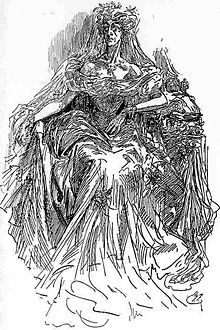
Here, the arguments have their own reasons. And I think the results are only all too obvious concerning the rise of the demagogue or populist who "apparently can reach the public" where so few in the decaying Miss Havisham-like Establishment cannot, such as:-


I don't mind Boris Johnson, he's more interesting than other politicians especially when he quotes some interesting passage or phrases from latin or otherwise and he often comes out with a funny turn of phrase. Boris Johnson the person I do not mind especially. But where I discriminate is the fact his face is plastered all over the Legacy News-Media instead of the actual Arguments themselves:-

The Market Solution: FLEXCIT Flexible Exit and Continuous Development

"A Dangerous Idea"?

I find that perhaps the ego of the person does not mind this. The popularity contest demands it. The baby-ification of British Culture is merely personified by one individual or a group of them. But when you have one side of the argument driven by a Serial Liar and the other side of the argument driven by a Personification of Political Infantilism of our culture:-


Amateurs are handing victory to the Remain camp

"The Leave camp have failed utterly to agree on a plausible, properly worked-out exit plan"

 Apparently all of Whitehall's major decisions are made by a coven of witches in Cornwall.

Given the one thing Vote Leave and Johnson fail to do is discriminate in their arguments in an adult and open invitation to argument and debate; especially Johnson who is able to blithely turn his arguments upside-down in imitation of other such "eurosceptic aristocracy" such as Ruth Lea, Boris Johnson, Daniel Hannan, John Redwood, Campbell-Bannerman, Nigel Farage and so many more political infants who will not make the hard adult choices of discriminating their arguments, to quote the fictional character Stannis Baratheon's reply to his servant Ser Davos in the fictional story A Storm Of Swords and:-


But only for those who CHOOSE to take the responsibility of adults, not act like political infants

My own opinion is that this one crack at Real (direct) Democracy is an exercise to correct the degraded process of "TO CONVERT (people)" into "TO DISCRIMINATE (arguments)". As said, "Arguments can have their own reasons" independent of popularity which indeed is ironically a form of bias. Winning an argument is not really winning a popularity contest, it's not really winning, it's merely selecting the current strongest argument from as wide an array of ideas and opinions as possibly sampled and implementing it until the next round of decision-making repeats the process! Ideas discriminate themselves best by references to ideas on the other side of the argument - if included so they can be actively excluded:-

Most old, stale eurosceptic arguments have to lose... that's their strength after they have first lost, to allow new, energetic Pro-Brexit arguments to win.

Sunday, 13 March 2016

Why? Living Someone Else's Dream

"Later, as he sat on his balcony eating the dog, Dr. Robert Laing reflected on the unusual events that had taken place within this huge apartment building during the previous three months."

This week sees the launch of The Leave Alliance. It's already a great achievement by an organization with such little regard by the "eurosceptic aristocracy" and indeed by extension SW1 Establishment. Also this week marks the release of the film adaptation of J.G Ballard's novel, written in 1975: High Rise by the British director Ben Wheatley. I really enjoy J.G. Ballard's novels. It resonates so strongly with something of my own personality, as it may also do so with others? What is that? A glimpse of what this might be is found in a minor interview:

An Investigative Spirit: Travis Elborough talks to J.G Ballard
TE: In several of your novels you have used a small community, the residents of a luxury housing development or a high-rise block for example, as a microcosm with which to explore the fragility of civil society. Do you think that your preoccupation with social regression, de-evolution even, stems from your childhood experiences in the internment camp when you saw first hand, how easily the veneer of civilization could slip away?

JGB: Yes, I think it does; although anyone who has experienced a war first hand knows that it completely overturns every conventional idea of what makes up day-to-day reality.


In the previous blog, EU: From Common Market To EU Constitution, it was noted in diagram form the genesis of the EU or Supranationalism in the architect of the EU, Jean Monnet and his experiences of war. A very important blog by Dr. RAE North EU Referendum: the genesis of obsolescence:-
"In fact, the First World War was far more important to the intellectual genesis of the EU than the Second, something that Booker and I observed in The Great Deception (see p.14 et seq).

And if there was one historical event which more than any other inspired what was eventually to become the European Union, it was the battle which had raged around Verdun the First World War. For the British the defining battle of that war was the Somme in the summer of 1916. 

Present for several months fighting for the other side was the father of Germany's future Chancellor, Helmut Kohl. So deep was the wound Verdun inflicted on the psyche of France that the following year her army was brought to mutiny. Its morale would never fully recover.

And from this blow were to emerge two abiding lessons. The first was a conviction that such a suicidal clash of national armies must never be repeated. The second was much more specific and immediate. It came from the realisation that the war had been shaped more than anything else by industrial power.


Thus, Loucheur came to reflect, industrial organisation was the key to waging war. From this he developed the idea that, if key industries from different countries, above all their coal and steel industries on which modern warfare so much depended, were removed from the control of individual nations and vested in a "higher authority", this might be the means of preserving peace. 

But the point that emerges – or should emerge – is that the First World War was in all manner of ways unique. By the time Part II (otherwise known as World War II) had ground its way to its bloody conclusion, the world had changed to an extent unimaginable to the original authors of the ideas which led to the formation of the EU.

Crucially, the post-1945 world was divided into spheres of influence dominated by two super-powers, with the A-bomb and then the H-bomb delivered by unstoppable Intercontinental Ballistic Missiles, holding the balance of terror which become known as the doctrine of Mutually Assured Destruction (MAD)."
Direct experience is not easily conveyed by secondary descriptions

What is very very strongly demonstrated here is the direct experience of people informs and shapes their world view. In The Great Deception this core and raw and direct experience on the the major influencers of civilization shaped the next step:-

Le Corbusier's design for his ideal city was in his mind the blueprint of social reform (credit: DailyMail)  

You can read a fascinating account of this perspective on "Central Planning" in the documentary discussed here: City of Towers – Christopher Booker – BBC 1979 and on youtube City of Towers with the sound unfortunately missing. We briefly met "Central Planning" or "Centralization" previously in The Road To The European Union:-

However according to  Friedrich von Hayek in The Road To Serfdom, similar such processes have not increased democracy through increases in size and power of the state, but Centralized power and decreased democracy:-

"The most effective way of making people accept the validity of the values they are to serve is to persuade them that they are really the same as those which they, or at least the best among them, have always held, but which were not properly understood or recognized before. The people are made to transfer their allegiance from the old gods to the new under the pretense that the new gods really are what their sound instinct had always told them but what before they had only dimly seen. And the most efficient technique to this end is to use the old words but change their meaning."
"The more the state "plans" the more difficult planning becomes for the individual.

The effect of the people's agreeing that there must be central planning, without agreeing on the ends, will be rather as if a group of people were to commit themselves to take a journey together without agreeing where they want to go; with the result that they may all have to make a journey which most of them do not want at all.

Is there a greater tragedy imaginable than that, in our endeavour consciously to shape our future in accordance with high ideals, we should in fact unwittingly produce the very opposite of what we have been striving for?

Nowhere has democracy ever worked well without a great measure of local self-government, providing a school of political training for the people at large as much as for their future leaders."
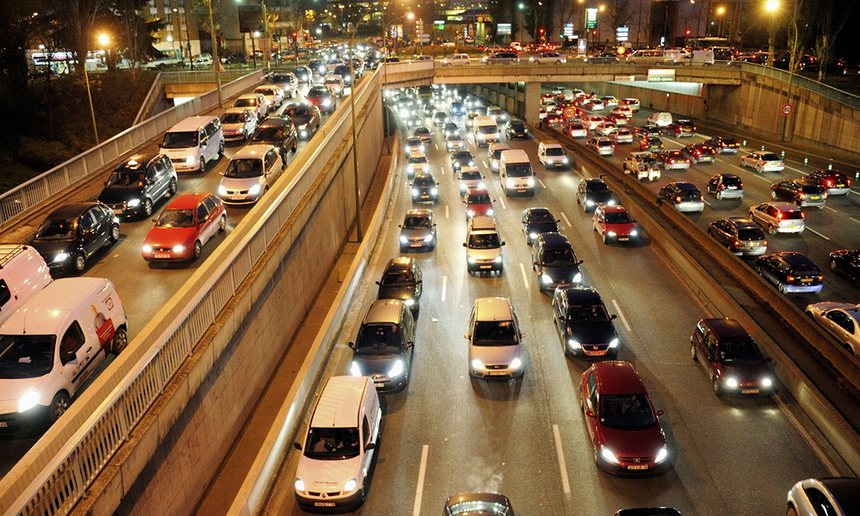
 Périphérique: Ring-Road around Paris: Separating the Central and Outer Suburbs such as the Banlieues

It's very interesting reading the above blogger's thoughts on this "Modernist" architecture retold at the above link:-
"City of Towers is a two hour documentary made by Christopher Booker for the BBC, first broadcast in 1979 and a master class in the history of Modernism that covers its birth from ideas first put forward by Antonio Sant’Elia, Auguste Perret and Le Corbusier in the early part of the Twentieth Century...

. . . to its fall from grace in the latter part of the same century when its supposed beneficiaries, the people who had to live in the concrete blocks that followed the Modernist model, rebelled, and it came to be seen for what it truly was, a failed philosophy."

 Bande De Filles ("Girl Gang") or English working title: "Girlhood"

The above film Bande De Filles / Girlhood is a story that takes place in the Paris Banlieues beyond the Périphérique. I enjoyed the movie and would recommend it highly. I also spent some time living in Paris and got to know some of the areas of this city, though to see a portrayal, even fictional of different areas is therefore rewarding: Who lives in different areas and how does their community and people see themselves? Well you can't help feel as if there's an impact on the architecture: Living in Montmartre on the hill is a idyllic area in this respect concerning the small community feeling it engenders and beautifully captured on film in another French film the magical realism fable Amélie. Ultimately the story in "Girlhood" is part coming of age story and part social observation of how the people living in some of these areas particularly perhaps these banlieues:-

Do Parisians buy property outside of Paris' Périphérique?
"In the U.S., the inner cities suffered while the suburbs became havens for the wealthy…just the opposite of what happened in Europe. Here in France, the central parts of the cities have continued to increase in value, while living in the suburbs became a less-expensive answer for families needing more space on a tighter budget. This is not true for all suburbs, but outside Paris in particular, the government built public housing in the banlieues (suburbs), to house hundreds of thousands of individuals from North Africa."
Frames their perception of themselves and their place in society? This is explored in Dirty boulevard: why Paris's ring road is a major block on the city's grand plans by Justinien Tribillon. For a lot of people, the community of the present, the ideas of the past have been codified into structures or even strictures that dictate how they live their lives. The driving force in "Bande De Filles" is the determination to live one's own life, to free oneself, better oneself but also to learn to live and overcome such obstacles, to find an "ecstasy of experience" in friendship, and, in finding a way in life or indeed a way out of oneself, one's own limitations: To live one's own life, not one dictated by others, environment or events. To find one's own identity and freedom in that.

I was a few months ago looking after some friend's children and took them into London to see the Natural History Museum. There was inevitably a Tube strike so we had to take a bus, which on a hot day and for young children merely added to what was going to become a gruellingly long day on their much lower staminas! Fortunately the bus we took instead of being one of those "bendy-buses" was:-


New Routemaster Bus: A more convivial and communal form of transport?

I could not help feel these buses had a "human dimension" to them that the previous flawed models did not apart from the technical specifications no doubt of "micro-pollutants", crunching the effect on traffic with hop-on-off they're primarily designed to handle. They seem more comfortable and friendly in their design of seating and passenger interaction, to me. I don't remember this being the main reason or reasons for their reintroduction but it struck me as quite important if it is multiplied invisibly and unquantified across the entire central London?

In those tower-blocks the vision of the intellectuals in coding and planning for people seems to have been pre-loaded or declared instead of a more iterative way forward, an organic growth of communities; which the older buildings despite their poor specifications at least seemed to engender a human dimension in. I'm for this reason not overly fond of over-regulation of how people decide to live. But if you look at Paris this is a battle that appears more exacerbated for them. 


It was Boris Johnson who relaunched the Routemaster. But unfortunately we have to suffer the Personality Politics dominating the Referendum of our SW1 masters, and their plans for us: Pete North notices this too: Bugger off Boris, and by Dr. RAE North: EU Referendum: not on our side, and Mr. Brexit expanding to the wider Tory Party itself that is dominating Remain and Leave turning the Referendum into the Tory Party Self-Promotion and Leadership Staging Event, Just whose side are the Tory eurosceptics really on? The latest fear-mongering (FUD) from Cameron: Cameron's latest fear mongering on farming, Mark Carney's curiously similar contribution and even some mutterings of Barak Obama down the pipeline, too: Banking is global and so is regulation; the industry will continue to thrive in the UK

A certain kind of political snobbery: Keeping others "out"

The Sceptic Isle writes: The EU is moving towards its final destination, it’s time for us to depart and choose a different track.

What I want to do with this blog is simply to reflect not on this end destination but to reframe the same message but in a different form: The real form, of ideas of people from the past and how their ideas shape the present world of present people.

The question is: Is it still practical and applicable? If not: Why are we living the dreams of people long-gone and possible the coherence of those ideas, their philosophy proving to be "a broken philosophy"? I can't help consider that a certain form of "rent-seeking" "Political Class" rules Europe, and they keep other peoples' ideas out while they cleave to centralization of power and part of their pay-off is to treat with contempt anyone below themselves while supporting that which they themselves are underneath. Thus at the top: The old ideas of a few.


High Rise - teaser trailer 18.03.16

 Coming back to Dr. RAE North's blog on EU Referendum: the genesis of obsolescence:-
"It is significant, therefore, that the Battle of Verdun started on 21 February 1916, almost exactly 100 years ago, and is still cited as the reason why we should surrender our democracy (what's left of it) to a supranational construct based in Brussels."


Related Note: Christopher Booker's recent article: How Britain connived in the end of the Kalahari Bushmen

As the Botswana government persecutes this people and drives them towards extinction, the UK and EU stand by and do nothing