Red Cliffs Of Dawlish

Red Cliffs Of Dawlish
Showing posts with label EU Referendum. Show all posts

Monday, 29 August 2016

Politics & Power: The Power Of "Will Power".

Dance music is one choice, but listening to these speeches before an exercise session might just be another choice to give the old adrenaline a booster?


I listen and read and think about the current "currents" in the legacy news-media and beyond, in other deeper sources of information on the current triangle between the EU, Brexit and the Referendum Campaign. The former two are indeed scholastic or intellectual. I think the Referendum Campaign was nationally hyper-emotional, and it's no surprise there have been reports of mass hysteria. Interestingly, I was watching some of the World At War Series as well as some of the series on World War I. These events that imbued the EU with so much of it's spiritual "guidance" as a matter of fact: Booker: the EU dies where it was born. I may have not mentioned it before but I am a great admiring of Booker's "book":  The Seven Basic Plots. Moving on: I think am right in saying get the feeling that during the 1930's Germany went through the various stages described so well by Booker: The Dream Stage and such deep tragedy, The Nightmare Stage subsequently. Booker has long used this tool of filtering events, and I think you can see in his latest piece it's correct application  (once again) concerning describing the leadership of the EU's reactions currently? Probably without stretching the theme too far, there's a draining away of will power about the EU... maybe.

Anyway, one of the interesting descriptions of Hitler's rise to power was his own powerbase was built on multiples of fractious groups only united behind a common cause or leadership on a very thin surface of support, perhaps a leadership with a great deal of "will power"? If you watch the clip (it seems slightly doctored to enhance the effect of his "hypnotic speeches" and the religious fervour they worked up in crowds of people) I think it's fairly evident that this is the effective message and promise Hitler offered Germany at this time? And the preceding details that created such an environment I think are easy to understand just how conducive they were to transforming the emotional state of Germany towards such a leadership outcome? It was all building all along.

As said, I listen, watch and read and think about the current situation and it's infernally complex and chaotic. There was a very interesting example of some of the emotions tumbling around about Brexit and the EU linked at EUReferendum.com in the comments:-


I'm not entirely sure how much of the above is a combination of emotional processing, pedestal pitching of emotions and other incontinent reactions. But there's some useful insights into how people are genuinely feeling and reacting to the dissonance of a result that is going to be difficult for them to apprehend given the build up of anticipation, expectation and the subsequent dissipation and negatively in this case. There's plenty of this sort of material all over the place. It also incidentally has it's corollary in the Leave supporters. What's tell-tale and this is repeated a lot:-
  • WHO?
  • HATE
  • FASCIST
Apart from the hilarious, unintentional joke about "I thought that would be America..." (!!). Most people are basing their reactions on the other side. For them the symbol of this other side (from the Remain perspective) is Haters which when given a political colour scheme becomes "Fascists!". We come full circle back to Hitler. And I think the myth begins here. The myth has taken over the reality (see: The Many Not The Few for a another (very different but still "Myth supplanting"). It's become a story about symbolizing "hate" taking control.

I think it's not this actually. It's much more accurate to consider it as a case of a beaten people in difficult conditions with all the usual fractious divides amongst so many people at such numbers, finding a political structure which pooled them together under the aegis of "Will Power".

If looking at the subject of the EU, there is The Great Deception. On Brexit there is FLEXCIT. But when it comes down to the Referendum Campaign there is none of this intellectual dimension. There's emotion and vying for groups and the politicians promising that "Will Power" will resolve all problems if only it is "lent" to them in sufficient number. And likewise, post-Brexit The Leave groups are all pomp and fanfare and prestige and crowing that Will Power is all that is needed for a successful Brexit. Coincidentally I believe this integrates into what Dr. North has suggested supplants careful reasoning: Brexit: the failure of feedback. When people are swept up in the tide of emotions outpouring from so many different groups, then the solution is will-power and any problems are grossly de-emphasized.

It's not just the UK, but the EU uses Solidarity which incidentally the Nazis also used of course. It's not that either political entity is "hateful" it's that they're both under the same pressures and stresses pulling in different directions in multiple ways, it seems to me. Inevitably the solution is always:-

"More solidarity/sovereignty, more EU/UK (or folk-strength), more will power!!!"

Could almost be a Hitler speech, eh?

I really want to get back to reading about Agriculture, Fisheries and the Environment, I've been collecting various bits of information. Considering all the above, there's so many different ways of talking about it, it ends up being the case that simply remaining silent is the best reaction, because it captures all the above without neglecting too much of it by zealously selecting only a small drop of this ocean of outpourings.

If there were more people more silently listening and considering more and then asking sensible questions about ordinary things some more, maybe the actual process of Brexit in light of understanding the EU (and it's deep origins back in history) might become a bit more apparent and a bit more of a priority, first?

Saturday, 18 June 2016

To Answer or To Question? The Ultimate Primacy of This Referendum


The First Question People Often Ask: "So which way will you vote? In or Out?"


One of the things I've noticed when talking to people is that they often FIRST ask the question of which answer the other person has already decided to choose on how to vote in the Referendum on Thursday, 23rd June, 2016.

Now I wonder why they do this, because once someone gives their answer, it's either the same answer and hence does not give any new information or else it's the "wrong" answer and the two will likely work against each others' answers for reasons that will most likely appear at cross-purposes and subjectively so.

First before suggesting, an much better approach to talking about this Referendum, I think this approach taken by people is partly economy of discussion: A simple Y/N Question and Answer provides a flow to conversation without falling into a political swamp from which both people probably prefer only to dip their toes in. I notice also that people hold reasons for voting that are not really reasons but gut-feelings and emotional and therefore very much more often "inexplicable" even by the person who holds them.

The other reason, apart from the pitfalls of communication, is misconception:-


Why is the Referendum Question treated as "Shopping Trip" with each answer's value (REMAIN/LEAVE) dependent on "filling your trolley with more for less - than the other trolley"?

My guess is that this puts the person/voter directly in between the two questions and thereby they decide individually across the UK what is of value to them and hence how they will choose to vote.

My argument is this: IF that description is more or less correct, then I think it explains so much of how the main campaigns fail to be in the words of so many prescient commentators: "Edifying". And indeed I'd argue the number one criticism by people is that "We don't know enough to vote", even though this is supposedly a democracy and that's supposedly the best thing demonstrating how "civilized we all are today".

It also explains why underlying, people shoot straight to the answer and then try to fit the "workings" as they prefer like picking various items off a shelf to fit the trolley they've already chosen.

In my opinion the above shows that the most useful bit of information in the answer is the in the workings which identifies: "Angles on a straight line adds up to 180 degrees". FROM this, the calculation and final answer in digits makes sense.

Now the problem is still apparent. Irrespective if you follow the line of reasoning here, how can you actually persuade people to instead of inserting themselves into the middle of the argument and being driven by conviction or in other words "belief" PASSIONATELY (that excessively over-used word to condone conviction and hence societal signalling of sanctioned political behaviour); how can you persuade people instead to learn WHAT? the argument actually is, to describe it, then explain it via context and finally allow people to put arguments forwards based not on what they think will be "good for me/us" but what will actually lead/yield USEFUL RESULTS to our society?!!

In fact there's fewer better examples of demonstrating this conceptual change than listening here to Regulations on BBC4 More or Less. In the blog EU Referendum: dealing with regulation Dr. RAE North points out the "Shopping Trolley" mentality or conception used by Vote Leave in this EU Referendum, which I'm suggesting is making the same mistake of General Elections which become about supporting a tribe (the bigger the tribe the better or "more right"...):-

...and less to do with actual subjects themselves; is inevitably going to turn out to not be "items on the shelf you the voter can "pick and choose" at your heart's fancy's whim! And that is exactly why people feel cynical about politicians and why politicians behave cynically towards people:-


"Now this is precisely the sort of "red tape" that must be removed from the statute book if Vote Leave is to meet its target of saving billions from scrapping all these burdensome "regulations", one of its claimed advantages of leaving the EU.

For this, however, the idle children of Vote Leave rely on a facile piece of work conducted by Open Europe in which it is asserted that the "top 100 EU rules" cost the nation £33.3 billion a year. Interestingly, the Environmental Protection Act is not even mentioned in this work, even though it is the fount of much subsidiary and costly legislation.

Its premise, though, that this £33.3 billion represents an annual cost which can be saved by leaving the EU – as espoused by Vote Leave – is something I describe technically in the BBC Radio 4 programme More or Less as "bollocks".

In the first instance, much of the regulation to which Open Europe refers is of global or regional origin, which we would still have to implement outside the EU. Much of the rest replaces national law that we would have to be implemented anyway, with the EU simply updating it. Sometimes, this has been at the behest of Member States, such as the food hygiene regulations, where the latest round of changes was initiated by the UK.

Of the balance, much of this is commercially orientated, and most businesses would adopt it anyway – the so-called Brussels effect. They need the certainty and predictability that regulation brings to the business environment. Overall, therefore, there are virtually no savings to be gained in the short- to medium-term.

When they first made it in October 2013, we took the Open Europe claim apart. Then Business for Britain made the same errors in 2015 and we took their claims apart as well. Then we saw the Treasury Committee trash the figure.  

But such subtleties as facts have never troubled Vote Leave. They ignore such minor details in favour of their propaganda, relying entirely the Open Europe work as their source. As to a more nuanced look at regulation, Vote Leave isn't on this planet."


Regulations & Standards - More Than Meets The Eye: A source of "Central Planning" or the revolution in technical "data-driven" systems with which standards can be harmonized and improved?

So if you decide to listen to the BBC Radio 4 podcast "More Or Less" on the EU Referendum and wonder how the curious and humble "Cabbage Regulations" can amount to a staggering "26,911 words" and the populism of "Bonfire of Cutting Redtape"; just consider that the portrayal of the Shopping Trolley or Pro vs Con Choice may be very very misleading and a source of negative politics.

An example in the above is the argument concerning that "The Norway Option":-

Vote To Leave: "WHAT RELATIONSHIP WITH THE EU AFTERWARDS":-

"Norway currently adopts 93 of the Top 100 costly regulations in the EU." ~ Raoul Ruparel, Open Europe Aired 16th June 2016
 Here you go, "negative politics" that sounds so attractive or as per Dr. RAE North: "Bollocks!"

I first came across this alluring Top 100 Costly EU Regulations via What the EU Costs the British taxpayer and you can see it also at Open Europe: Top 100 EU rules cost Britain £33.3bn where you can see that back in 2015 Open Europe was trying to "Kill Off" The Norway Option for Brexiteers:-
"In the latest installment of Open Europe's ongoing Brexit series, we look at the burden of EU regulation on the UK economy, and whether swapping full EU membership for EEA membership, i.e. the 'Norway Option', would be a better way to cut regulatory costs." Pawel Swidlicki  Open Europe16 March 2015

You see this argument of a Shopping Trolley is a trap for Brexiteers attempting to snare people. And indeed the former Open Europe Matts Pearson started working for David Cameron in the Remain working group in anycase. Almost as obvious as The Tufton Street" gang of Vote Leave...

In the previous blog we looked at the "starting conditions" for any Leave vote and the practical tests they would experience being extremely "selected". Dr. RAE North points out that concerning the acquis and legislation on Leaving:-

"On top of all that, we cannot under any circumstances risk throwing the babies out with the bathwater. In many major legislative instruments, we see confection of international, European Union and national requirements, so intertwined that it is sometimes impossible to tell which is which. Some of it is good, and we will want to keep it. Only the bad needs to be removed.

Thus, the option presented in Flexcit is the repatriation of the entire EU acquis – as it applies to the UK – and a measured review over time. We also recall that this was the option adopted by the Indian government on independence in 1948. But it was not until 1956 before it appointed a review commission to start the work of weeding out unwanted legislation.

We can hardly see the UK acting much faster – or at all. Now, there are different ways of doing things, especially with the onset of globalisation.

 The great benefit of leaving the EU is that we regain control at the true European level (with UNECE) and in the many global bodies of which we are members. Not only do we regain our votes, though, we also regain the right of initiative. We can propose new measures at global level and, by fostering alliances, change the global perspective.

Over time, this will have the effect of re-shaping not just the national but the global rule books – exploiting the WTO Agreement on TBTs -  to the benefit of the entire world trading system. That is far more credible a vision than the obsessive, negative focus of the official "leave" campaign. And in the final analysis, most savings will come from better and more effective regulation."

If you look at the two ways of viewing the EU Referendum Question: The Answer and The Workings as it were (in my flow decision-tree diagram), I think instead of asking or answering "How Will You Vote: In Or Out?" I think it's much more productive for people to hold such a document and point out that the workings on either side of the question suggest the nature of the answer:-

  • If you want Supranational Political Union then the answer is a bit shorter: Carry on as we are and vote Remain.
  • If you want more control over our Sovereignty and Global influence such as the above regulations then vote Leave.
In the above, I've even got the relevant sources confirming each option. Therefore we arrive at two answers:-
  1. Your personal answer for you and your family and line of work which may DIRECTLY be affected by the EU Referendum? If so, explain very precisely to people HOW? before answering "In or Out".
  2. Your political answer for you as a UK Voter choosing between the EU or an alternative relationship. Here you should find common ground between people to productively debate different points of view democratically - just don't expect the politicians or think tanks (eg Open Bollocks!) to help you however!

Monday, 16 May 2016

The Darling Buds Of May

A tree in May: Life, light and colour: So much to see and so much to do outside.

I think perhaps for those that live in the UK Islands, this time of year, May, is a time of natural exuberance and one that our modern life schedules fails it seems to fully factor into with the change of the season. I remember one of my previous office jobs and watching some tree-surgeons tree-climbing and chopping back the branches of the trees away from the office buildings, outside. At this time of year I really enjoy being outside and indeed I've been doing just this for the past week: Working on renovating a property and it's land and working in the evenings managing a Summer sport. I've also managed to enjoy so much of the natural world from plants such as bluebells and somuch more to insects to myriad and highly visible and audible birds and finally to foxes and their cubs.

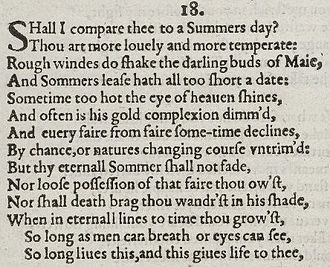
William Shakespeare's Sonnet 18 in particular the phrase:-
"The Darling Buds Of May" (darling or "to darl" either is as good as the other!)
 By William Shakespeare - http://luna.folger.edu/luna/servlet/s/by2g21, CC BY-SA 4.0, https://commons.wikimedia.org/w/index.php?curid=47881412

Captures much of what I've barely tried to describe in observation above but with more mood and fewer words! In fact at this time of year I feel my behaviour is in need of significant alterations:-


Two Jackdaws collecting horse hair to use to line their nest with.

I'll definitely put out some collected horse hair next year along with any bird food, realizing the value to these animals of such a material at this time of year.

As such, the EU Referendum subject has felt more remote than it has been for me for a long time. That said, given the huge efforts made for The Leave Alliance Launch and FLEXCIT - The Movie filming, the ideas and content discussed at these meetings are very vivid and fresh in my mind while I'm about other things. In fact so much so, what amounts to "news" in the Legacy News-Media feels like an anthropological documentary of some kind where the strange and bizarre customs of the natives is observed in bafflement but nonetheless recorded for science...

It's mainly the ever more perverse behaviour of our politicians as they go about their roles in the same way as if the Referendum were no different to any general election and they can come out with their lies and low quality arguments and hence low value to our society. There's plently of discussion on this and observation and description of it by "The Blogger's Army" in support of The Leave Alliance:-

Pete North
M.E. Synon 
EUReferendum.com
Leave Alliance
Independent Britain
White Wednedsay
Scribblings From Seaham
EU Question
Semi-Partisan Politics
The Brexit Door
The Sceptic Isle
I still manage when not able to blog and develop ideas on the EU Referendum to read most if not all of the above sources. In fact, looking at the fact there's a small but steadily emerging movement, despite the risible politics of the UK made even more visible in this EU Referendum:-


The burnt remains of the Establishment controlling both "Remain" and "Leave" sides of the EU Referendum

Wednesday, 11 May 2016

EU History: Destructive Emotions & Creative Thinking

Fire and Ice ~ By Robert Frost

"Some say the world will end in fire,

Some say in ice.

From what I’ve tasted of desire

I hold with those who favour fire.

But if it had to perish twice,

I think I know enough of hate

To say that for destruction ice

Is also great

And would suffice." 

The above poem is not only a nice poem but as with good poems it condenses the core elements of the content as much as possible, in this case the musings on "destructive emotions that shape the consequential external destruction invoked". In this spirit, it's also referred to by George R.R. Martin in his series of fantasy epic: A Song Of Fire And Ice and acts as the complete canvas to all the micro and macro dramas in that "tapestry"; involving multiple warring factions which itself is loosely based in historic events of The War Of The Roses (and other such conflicts fictional or historic):-

Attribution: By Richard Burchett (1815–75)[1] - File:Richard Burchett - Sanctuary (1867).jpg, Public Domain, https://commons.wikimedia.org/w/index.php?curid=12626198

"The Wars of the Roses was a series of wars for control of the throne of England. They were fought between supporters of two rival branches of the royal House of Plantagenet, the Houses of Lancaster and York. They were fought in several sporadic episodes between 1455 and 1487, although there was related fighting before and after this period. The conflict resulted from social and financial troubles that followed the Hundred Years' War, combined with the mental infirmity and weak rule of Henry VI, which revived interest in Richard, Duke of York's claim to the throne."

Here was a war for control of the Throne of England. Subsequently power itself was fought over in The English Civil War:-

Attribution: By Unknown - Encyclopædia Britannica online, Public Domain, https://commons.wikimedia.org/w/index.php?curid=8631860
"The English Civil War (1642–1651) was a series of armed conflicts and political machinations between Parliamentarians ("Roundheads") and Royalists ("Cavaliers") over, principally, the manner of its government. The first (1642–46) and second (1648–49) wars pitted the supporters of King Charles I against the supporters of the Long Parliament, while the third (1649–51) saw fighting between supporters of King Charles II and supporters of the Rump Parliament. The war ended with the Parliamentarian victory at the Battle of Worcester on 3 September 1651."
Here was a conflict between two factions: The Throne and the emerging power of Parliament itself.

Before moving onto the third and final "conflict" in this series on "Conflicts of Power by Internal Forces" centred on Political Power in our history, we need to take a view of another history neighbouring, a "Conflict of Power Amongst External Forces": Two relatively recent blog posts on this subject by Dr. RAE North at EUReferendum.com and in connection with the recent Introduction by Christopher Booker to FLEXCIT: The Movie:-


They are, how to express how essential these two summaries from The Great Deception, essential to understanding the genesis of forces acting on the Remain side of the question in the upcoming EU Referendum Question and as I asserted in the previous blog, any derivative motivations and intentions of the modern descendants or inheritors of this strand of feeling and thinking in how to "manage power":-
"What was especially interesting, though, is that Juncker and Cameron are pictured visiting a First World War cemetery on the Somme, despite the official hagiography of the EU firmly rooting its genesis in the post-WWII period.

In fact, the First World War was far more important to the intellectual genesis of the EU than the Second, something that Booker and I observed in The Great Deception (see p.14 et seq).

So vital is it that we start Chapter One with an account of how, on 22 September 1984, two portly middle-aged men stood holding hands in front of the largest pile of human bones in Europe. One was the President of France, François Mitterrand; the other the Chancellor of Germany, Helmut Kohl.

The reason why the two most powerful political leaders in western Europe were staging an act of reconciliation before tens of thousands of graves was that the site of this ceremony was the ossuary at Douaumont, just outside Verdun in eastern France.

And if there was one historical event which more than any other inspired what was eventually to become the European Union, it was the battle which had raged around Verdun the First World War. For the British the defining battle of that war was the Somme in the summer of 1916."
The Great Deception (2nd Edition Link)


And again in the subsequent blog but with a view not to the past (World War I) but to the future (World War III):-

"With Mr Cameron claiming on this of all days, "Europe Day", that leaving the EU would bring us closer to war, all he is actually doing is repeating the most insidious myth of them all in relation to the European Union - that this monstrous construct has helped keep the peace.

The myth finds is purest form in the EU hagiography, where the European Commission's asserts that "probably very few people in Europe know that on 9 May 1950 the first move was made towards the creation of what is now known as the European Union".

Crucially, it would have us believe that this was an attempt at preventing a Third World War, but completely omits to tell us that the intellectual genesis lies not in the post-WWII period but in the 1920s, devised is response to the problems arising out of the First World War.

For the myth-makers, though, the origin of the EU was Paris on 9 May 1950. Against the background of the threat of a Third World War engulfing the whole of Europe, the then French Foreign Minister Robert Schuman (pictured above, right, with Jean Monnet) read to the international press a declaration calling France, Germany and other European countries to pool their coal and steel production as "the first concrete foundation of a European federation". 
This was what was on offer was the creation of a supranational European Institution, charged with the management of the coal and steel industry, the very sector which was, at that time, the basis of all military power. The countries which Schuman called upon had almost destroyed each other "in a dreadful conflict which had left after it a sense of material and moral desolation". Thus, concludes the European Commission in its own history, "Everything... began that day".

Needless to say, the reality is very different. Far from the heroic Schuman standing at the centre of the "project", he turns out to be little more than an unwitting stooge, manipulated by one man who had made its his life's work to set up a "government for Europe"."
That man was Jean Monnet.

FLEXCIT THE MOVIE Intro by Christopher Booker. ~ Linking both sides of the argument and pointing out the difference between quality arguments and "destructive low quality emotions" that dominate the Referendum today.

What we see is that the widely held belief about the EU is itself a Myth taking the form of a "Creation Story" and that story is not factually/historically accurate, even if it's hyper-emotional. Far from seeing the genesis of obsolescence alone, we see the seeds of destructive emotion where perhaps "we least expect it" and indeed the European Union does not appear to have developed as perhaps so many in power set the peoples' expectations for it towards, only 10 or 15 years ago?

The "Creation Story" is very important, to forging an "origin of legitimacy for political union and power". Ultimately (that means eventually on this preset course!) however this requires a formation of an established "Demos" of some form as acknowledged perhaps under International Law? Indeed much of this is the thinking behind those who still support the further Political Union of the EU:-


So you see, the assertion in the previous blog for both sides of the argument, despite my personal support of one over the other, I think is still highly applicable, irrespective of my own opinions, the arguments themselves must be asserted.

And here is indeed where and why I part ways with the EU Remain side: Those destructive emotions we see in our histories and in our stories ultimately find their most potent form when the consolidate and centralized around power instead of dispersing or controlling that power or "kratos" as per The Harrogate Agenda:-


To be clear I'm not pitting the forces of "Good" on one side vs the forces of "Evil" on the other side. For some European Nations the EU may indeed under The Fundamental Law above be a very necessary next step for many possible reasons.

However, coming back to the UK, and those historic "Internal Conflicts" over the source and control of political power:-
  • The War Of The Roses (Throne vs Throne)
  • The English Civil War (Throne vs Parliament)
  • EU Referendum (Parliament vs People)
In my view, the modern equivalent of those previous power conflicts is fortunately not a battle involving either guns or steel but ideas as is possible when democracy establishes itself in a nation and the idea of war recedes as a destructive way to resolve problems rather than the creative solutions people can generate through argumentation and analysis and communication tools:-

If we take another model of understanding and apply it to this posited idea:-


What we see is that the basic necessities of life are much to are "First World Problems" chagrin catered for and we run up against another layer of problems. In fact "Safety" is a basic expectation of our own government and social contract with the state. But it is a basic "need" and one that I'm sure the UK is predominantly in control of. Yet the government failing at delivering "higher needs" inevitably overplay's it's hand concerning how valuable it is and indeed how valuable the EU is, doubly so given it's own "Creation Story" in this area. And so so much of the debate is bogged down via lower quality arguments and lower order needs without a positive argument that reaches towards more productive and creative and growth generating solutions:-
What we see from FLEXCIT is those higher order forms of actualization and self-expression by people:-


I'd finish this overview of history and the "Remain" side of the question, by suggesting for the UK, clinging to "security and safety" is the least or minimum of our aspirations for progress. And driving that "expectation setting" is our own Parliament and politicians who in my opinion more than anyone appear to be holding back the UK's ability at creative thinking to solve our modern and very global problems.


Tuesday, 10 May 2016

EUReferendum: The Pub Question

The EU Referendum Question - Visualized


During the filming of FLEXCIT: The Movie, the question was asked:-

A Visual Aid To Shared Attention During Discussions - Available on All Good Smart Phones (!)

"How do you explain the EU Referendum to anyone if you are talking to them in the Pub?"

Which is to say, how can you talk about the EU Referendum and explain to anyone to help them understand the headline issues and hence persuade them how to vote? As Dr. RAE North pointed out, there's a limit to how much you can simplify or "dumb down" a subject as complex as this. But I think establishing some fundamentals using a visual aid to create context to either choice is a possible substitute?

Afterall in the pub we can use our smartphones to tell us the directions of somewhere on a map (google maps for example) or we can use google to find the answer to a pub quiz question too (if we are cheating!). So why not an EU Referendum Question, as well?

I produced the above video in under 2 minutes as the most summarized overview of the EU Referendum using the "Map Argument" or "Decision Flow Diagram" approach, in both cases to visualize the context around each question and provide the necessary headlines should people wish to learn more and I've included a visual of the information that is:-

  • Readily available to anyone on the internet to use to inform themselves.
  • Readily available to the Legacy News-Media and politicians who in the main continue to ignore and not use such wealth of information and hence continue to perpetrate a disservice on the citizens of the UK.
  • The sources have been selected for quality and for the essential fact they are all holistic: They all work together to create a complete and definitive argument structure on both sides of the question.

I think ultimately people are most interested in the Destination of the vote, and leaving the in between details to politicians and others to reassure and secure such complexity for people to then consider.

Afterall isn't that the job of the politicians and if they're not doing a good job or indeed failing at this vital job we have elected and paid them to perform in public service of representing the people... can we get rid of them?!


Thursday, 4 February 2016

Sticky Ideas: Progression via Selection

Spring Progression: Snowdrops followed by Daffodils followed by Bluebells

I recently spotted some of the first Snowdrops of Spring; which is always a welcome sight, not only as they are beautiful flowers but also they remind me of the good things to come, to anticipate positively the future progression through mid-Spring with Daffodils and then into late Spring with Bluebells.
"It is estimated that 25%–50% of all common bluebells may be found in the British Isles."
 In the previous blog it seems like we're trapped in "Winter freeze" in the progression of our Referendum debate and discussion, EU Politics: Groundhog Day (2nd February), and so the question is: Why is this? We already noted that some very Sticky Ideas dominate the discussion as per Arguments: In The Deadly Grip of Confabulation, with David Davies talking about "German Cars!" on the Daily Politics today perpetuating these empty ideas ie "political sloganeering memes". We've looked at Richard Reed of Innocent Smoothies banking on these empty memes to propound his own ignorance and dam up progress.
Simple … Unexpected … Concrete … Credentialed … Emotional … Story

  • Be a master of exclusion.   Less is more.  Ruthlessly prioritize and focus on the vital few.
  • Boil it down to simple + profound. Create messages that are both simple and profound.
  • Create engagement.  Use surprise, emotions, concrete images, and curiosity.
  • Surprise people.  Surprise people’s expectations.
  • Have testable ideas.  Have a ‘”try it yourself” approach and help people test out your ideas for themselves
I think one of the challenges has been to provide a counter vision that can become a "Sticky Idea" more powerful than the above Confabulations. One sticky idea that "Brexiteers" need to get their head around is Selection ie the point 1 above: Exclusion:-


Progression: High Diversity of Ideas (LHS - BEFORE) ====>>>> Low Diversity of Ideas (RHS - AFTER)

In the above Referendum, if it is a well-structured Campaign before the Polling Day, there will be a competitive selection by the entire electorate (huge sample size ie full population sample!). Listening to Margaret Beckett also on The Daily Politics Show coughing up the "terribly dark and dangerous vision of Brexit" suggests to me a paucity of strong ideas on the Pro-EU side of the argument. But it's very easy for people like her to attack the Pro-Brexit (Leave) side of the argument due to the sheer diversity of ideas, many of them weak.

Oral statement to Parliament: Prime Minister's statement on EU renegotiation - 3 February 2016
David Cameron's powerful edict: Never say never: "We Shall NEVER surrender!"

It is interesting to hear David Cameron's speech above for what he will present as his "British Model" to the British public for the Referendum. "Never" is a very powerful word to utter; a clear evocation echoing our history, patriotism and sovereignty under duress...

If he really means all these things using such powerful evocation of the nation's identity and foundations of our society and state, then surely for "NEVER" to really mean "NEVER" then:-

Achieves that unequivocally. In effect:-

What we see in the above tabulation above, is that:-

  • The top-half of the table, 1-11 = Political Union. 
  • The bottom-half of the table, 12-18 = Single Market (+ Global Market).
 Aka what we've already met before: The Market Solution: A Growing Solution. So what we have concluded is that The Single Market (+) as part of Withdrawal aka Brexit/Leave is a critically positive outcome + the removal of political union (-).

However for this progression to work, selection must operate. And in my opinion the biggest selective pressure on the UK is indeed our >40yrs of EU Membership! Which boils down to Article 50 Lisbon Treaty; the latest and last Treaty we were signed up to by our Prime Minister which we did not get a Referendum on - until now.

The Referendum Question depends on The Single Market which depends on the stipulated terms of our EU Political Union membership (presently) = ARTICLE 50 LISBON TREATY

Progression is via a feedback loop: The Referendum Question requires Single Market guarantee to then vote Leave to remove the Political Union. Removal of the Political Union requires: Article 50! The Selection Bottleneck = Article 50 to withdraw/exit from Political Union.

So, how to make this idea Sticky? Using the advise we must refine our message and Exclude, Boil It Down, Surprise People and Tell A Story:-

EXCLUDE:

-


 SIMPLIFY:

 +

=

 SURPRISE:

&

 TEST:


Wednesday, 3 February 2016

EU Politics: Groundhog Day (2nd February)


Groundhog Day: Six more weeks of Winter or is Spring on the way?

A very popular and very funny and brilliantly created film is the comedy film: Groundhog Day starring Bill Murray and Andie MacDowell. The premise of the film is that Bill Murray for reasons unknown must live the same day over and over again, which is Groundhog Day:-


"Groundhog Day (Canadian French: Jour de la Marmotte; Pennsylvania German: Grundsaudaag, Murmeltiertag) is a traditional holiday celebrated on February 2. According to folklore, if it is cloudy when a groundhog emerges from its burrow on this day, then the spring season will come early; if it is sunny, the groundhog will supposedly see its shadow and retreat back into its den, and winter weather will persist for six more weeks."


It would have been "perfect timing" to have written this yesterday to coincide with February 2nd, but I was busy with The Market Solution: A Growing Solution and the newspapers and interviews and commentary have mostly all landed today on the question of: "EU Reform" and "EU Renegotiation" so that David Cameron can hold the "EU Referendum" and "get it out of the way". That last phrase is I think very telling:-
  • Holding a Referendum on Cameron's "spin" not on >40yrs x7 Major Treaties is somehow going to resolve the question from now until June 23rd? Looking at below, the failure to serve people more democratically is as much a part of the reason to leave the EU and to not trust the politicians latest promises and their dismissal of the final delivery of a referendum, now that it has been officially offered:-
 A Growing Political Debt: Stuffing >40yrs and x7 Major Treaties into Cameron's reform renegotiation for the referendum to "refer to the people"...
  • Apparently it's "bad for the economy" so needs to be gotten rid of; but very little argument about the ability for a Referendum to capture the minds and imaginations of the electorate and turn out in large numbers to participate in Real (direct) Democracy on a singular and most important political subject.
  • If people are bored of this referendum in the news, why is that? Is that the fault of the politicians and legacy news-media? The trivialization of a problem to be "gotten out of the way" given it is such a large subject.
  • We know that a subject becomes boring when:-
 Main Priority for "Referral To The People": Education & Time To Think to make good informed and well-reasoned decisions on large subjects.

It's interesting to compare, but if the EURO had had more debate and more open discussion, then a better decision may have been made? So to consider the Referendum as "something to get out of the way" I think is very short-sighted.

Some summaries of this Groundhog Day EU Politics:-


 The Boiling Frog provides the most penetrating consideration of the present situation in my opinion: Namely what are the implications for the visible denouement being played out. That is to say: Or is it? And that further is to arrive at a very concrete conclusion: If David Cameron must resort to shadows and spin on the subject of the EU Referendum via EU Reform via EU Renegotiation, then the subject itself is casting too long a shadow over the functional purpose of politics in our political institutions, I would conclude.


Is the sun rising or setting on Political Union underneath EU Treaties for the UK?


Does the EU cast too large a shadow over UK Politics, it's very presence casting too much into shadow and doubt and uncertainty?


What are we to make of David Cameron's slippery and shoddy reform promises?

Pete North has the right of it: Their very behaviour, conduct and dysfunctional politics (their shadow) of our politicians is answer already and answer more than enough, itself.

I suspect The Boiling Frog above is correct. We'll get a relatively poor deal in February, then I think the EU will work it's magic on Migration (Dublin IV?) and with that final flourish Cameron may go for a Summer Referendum to "get it out of the way"; if he and the EU have concluded that a Treaty Political I.O.U Promise for Association Membership in late 2017 is not on the current agenda, for whatever reasons; and that without that his chances diminish irreversibly with time (and the spread of information and public understanding of the subject).

Only such dysfunctional politics could produce a June 23rd Referendum date given all the above and against:-
  • EC Recommendations
  • Regional Elections in the UK
  • Summer holiday season and major sports events
  • The lack of "fundamental change" once again promised by David Cameron and once again demonstrating he's a serial liar when it comes to the EU.
Again our politicians and media commentators fail to point out how and why this is dysfunctional to even talk up the prospects of an "early referendum". Alternatively it may simply be an exercise to "park" the EU Referendum jitters with complex papers and details until 2017? Either way all we're really doing is chasing after political shadows and making predictions based off such lack of substance!


Sunday, 17 January 2016

Pro-Brexit Arguments: Beyond the Mirage

The promised political oasis awaits you... oh reader; read on and learn nothing!

I think I can say with some small satisfaction, I'm on the same wave-length as Dr. RAE North at EUReferendum.com in the latest blog: EU Referendum: fighting through the chaff. It's worth quoting a significant chunk:-
"In campaigning terms relative to this referendum, "chaff" does an analogous job – spurious arguments coming from all directions which confuse the issues and make it almost impossible to conduct a proper debate.

For instance, given the argument over the source of regulation, and the impact of leaving the EU on the food industry, it should be fairly simple to establish the facts. Legislation in the food sector, perhaps more than any other industry, is internationalised, which means that the overall impact should be slight.

After all, in the field, we have Codex Alimentarius, the OIE, the IPPC, UNECE and the OECD, amongst others all contributing to the body of international standards which filter down under the aegis of the WTO phytosanitary agreement and the agreement on technical barriers to trade, to determine much of the content of the EU's Single Market acquis.

Thus, when we explored this issue, we found a Norwegian official who did not feel that his country was in any way disadvantaged by not having voting rights in the EU. As far as he was concerned, the international bodies, not the EU – were the "top table"."
Effectively the Guardian piece Brexit a 'nightmare scenario' for UK food and drink business is "chaff". They could have chosen numerous different policy areas and the legacy news-media continues to do so - to the same effect: Producing more chaff: In effect the cumulative outcome is a Mirage Argument that involves pointless battles between confused people on both sides of the debate and a decline in argument quality. This time it's Food Regulations; I'm sure there will be a next time with yet another Policy area inducing FUD from the Guardian and the like:-


Legacy News-Media: "The Rat In The Room"

 Leave HQ already warned that Pro-Brexit arguments are not about reducing Regulations (they'll be harmonized, consolidated, rationalized via the Globalization process now) in The big four Brexit Nos.


1. Don't talk about how much money Brexit will save [edit:(or lose!)]


 Open Europe, IEA, CER love the "Angels Dancing on Pins" Arguments


2. Don't talk about leaving the single market

 Legacy News-Media FUD: "Emotional Anxiety-Loop Indecision/Freeze response inducement"

3. Don't talk about cutting regulations 


25 Years Out of Date Argument: Little EU loss of perspective arguments

Here's The Economist huffing and puffing as usual: A background guide to “Brexit” from the European Union about very little to do with Brexit other than their "sophisticated presentation on mirages": A background guide to “Brexit” from the European Union:-
"British trade with other EU countries has risen rapidly since 1973, though as the European economy has slowed, its share of the total is declining (the EU now takes over 51% of British exports of goods, and close to 45% if services are added in). Yet whether Britain is in or out, the EU will be a key partner. For non-members such as Norway or Switzerland, trade with the EU makes up a bigger share of the total than it does for Britain. The effects of EU membership on trade patterns are difficult to measure, but John Springford of the Centre for European Reform, a London-based think-tank, and colleagues have carried out a modelling exercise which concluded that Britain’s trade with the rest of the EU was 55% greater than it would have been if outside."

4. Don't talk about controlling immigration


 Cameron will Trump Farage's demands: "Just enough to win a referendum"


Political (mirage) Success = Measures that can be done and will be offered by the EU

With Cameron hopes for EU concessions in 'second-tier membership' for UK and applying a sort of Emergency Break and multiple other small print additions, this is dealing with a derivative argument of The Great Deception - only an worse only politically - not Democratically nor Pragmatically across full scope of Migration Policy control (decision-making) and execution (management).

And here we need to cut through the chaff and look at what the Main Argument looks like:-
Most Of Our Politics is ABOVE our own system (electorate disconnection) and concerns our own politicians far more than we the electorate do.

There's two fundamental problems here:
  1. The super-machinery of the EU is designed for forging a Political Entity above the National Member state.
  2. Our own National "super-machinery" has been hijacked to serve this purpose and this is named The Great Deception
Most of the arguments we've seen above and that shape the conceptual understanding of so many people is as Dr. RAE North points out is "Chaff". Here we can compare the other side of the EU Argument:-

  1. Political Structure = Little EU (above) = Remain
  2. Regulatory Structure = Globalization! (below) = Leave


Quoting Dr. RAE North again:-
"Think then how much more advanced the "remain" campaign could be if two years or more ago, when Flexcit started to take the shape that we now see, journalists and activists had recognised the work for what it is. But, with elements on both sides studiously ignoring Flexcit, we have the bizarre position where they are falling over each other to complain that there is nothing."

Namely we see the Mirages in the Legacy News-Media from both sides of the argument. Eg Dominic Cummings is one of the worst culprits as per Mr. Brexit:
Dominic Cummings, his naked lies and supposed legal alternatives to Article 50


 "Any member state may decide, in accordance with its constitutional rules, to withdraw from the union."

It's really worth understanding Article 50 Lisbon Treaty as per Leave HQ once again: Article 50 And Withdrawal: An explainer. And why if there's one thing in the entire EU Referendum / Brexit argument we all should get right on all sides of the argument, it is Article 50:-

Here's why: REAL POWER:-