Groundhog Day: Six more weeks of Winter or is Spring on the way?
A very popular and very funny and brilliantly created film is the comedy film: Groundhog Day starring Bill Murray and Andie MacDowell. The premise of the film is that Bill Murray for reasons unknown must live the same day over and over again, which is Groundhog Day:-
"Groundhog Day (Canadian French: Jour de la Marmotte; Pennsylvania German: Grundsaudaag, Murmeltiertag) is a traditional holiday celebrated on February 2. According to folklore, if it is cloudy when a groundhog emerges from its burrow on this day, then the spring season will come early; if it is sunny, the groundhog will supposedly see its shadow and retreat back into its den, and winter weather will persist for six more weeks."
It would have been "perfect timing" to have written this yesterday to coincide with February 2nd, but I was busy with The Market Solution: A Growing Solution and the newspapers and interviews and commentary have mostly all landed today on the question of: "EU Reform" and "EU Renegotiation" so that David Cameron can hold the "EU Referendum" and "get it out of the way". That last phrase is I think very telling:-
Holding a Referendum on Cameron's "spin" not on >40yrs x7 Major Treaties is somehow going to resolve the question from now until June 23rd? Looking at below, the failure to serve people more democratically is as much a part of the reason to leave the EU and to not trust the politicians latest promises and their dismissal of the final delivery of a referendum, now that it has been officially offered:-
A Growing Political Debt: Stuffing >40yrs and x7 Major Treaties into Cameron's reform renegotiation for the referendum to "refer to the people"...
Apparently it's "bad for the economy" so needs to be gotten rid of; but very little argument about the ability for a Referendum to capture the minds and imaginations of the electorate and turn out in large numbers to participate in Real (direct) Democracy on a singular and most important political subject.
If people are bored of this referendum in the news, why is that? Is that the fault of the politicians and legacy news-media? The trivialization of a problem to be "gotten out of the way" given it is such a large subject.
We know that a subject becomes boring when:-
Main Priority for "Referral To The People": Education & Time To Think to make good informed and well-reasoned decisions on large subjects.
It's interesting to compare, but if the EURO had had more debate and more open discussion, then a better decision may have been made? So to consider the Referendum as "something to get out of the way" I think is very short-sighted.
Some summaries of this Groundhog Day EU Politics:-
The Boiling Frog provides the most penetrating consideration of the present situation in my opinion: Namely what are the implications for the visible denouement being played out. That is to say: Or is it? And that further is to arrive at a very concrete conclusion: If David Cameron must resort to shadows and spin on the subject of the EU Referendum via EU Reform via EU Renegotiation, then the subject itself is casting too long a shadow over the functional purpose of politics in our political institutions, I would conclude.
Is the sun rising or setting on Political Union underneath EU Treaties for the UK?
Does the EU cast too large a shadow over UK Politics, it's very presence casting too much into shadow and doubt and uncertainty?
What are we to make of David Cameron's slippery and shoddy reform promises?
Pete North has the right of it: Their very behaviour, conduct and dysfunctional politics (their shadow) of our politicians is answer already and answer more than enough, itself.
I suspect The Boiling Frog above is correct. We'll get a relatively poor deal in February, then I think the EU will work it's magic on Migration (Dublin IV?) and with that final flourish Cameron may go for a Summer Referendum to "get it out of the way"; if he and the EU have concluded that a Treaty Political I.O.U Promise for Association Membership in late 2017 is not on the current agenda, for whatever reasons; and that without that his chances diminish irreversibly with time (and the spread of information and public understanding of the subject).
Only such dysfunctional politics could produce a June 23rd Referendum date given all the above and against:-
EC Recommendations
Regional Elections in the UK
Summer holiday season and major sports events
The lack of "fundamental change" once again promised by David Cameron and once again demonstrating he's a serial liar when it comes to the EU.
Again our politicians and media commentators fail to point out how and why this is dysfunctional to even talk up the prospects of an "early referendum". Alternatively it may simply be an exercise to "park" the EU Referendum jitters with complex papers and details until 2017? Either way all we're really doing is chasing after political shadows and making predictions based off such lack of substance!
Edward Heath signs the United Kingdom's Treaty of Accession (Brussels, 22 January 1972)
The signing of the Treaty of Maastricht took place in Maastricht, Netherlands on 7 February 1992
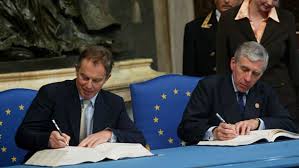
Tony Blair signing The EU Constitution Treaty 29th October, 2004
Gordon Brown signs The Lisbon Treaty 13th December, 2007
Recently the role of the Media in propagating state-sanctioned or planted propaganda was looked it: Journalism: Garbage In Garbage Out (GIGO)
The logic is simple in the Legacy News-Media:-
Garbage Input OR Garbage Model = Garbage Public Information
However the Legacy News-Media is in both cases:-
Garbage Input AND Garbage Model = Garbage Public Information
If you look at the Legacy-News Media reports around the time of the above Treaties, you'll see more or less the same pattern of amorphous information you see today in the build-up to the EU Referendum: Remain or Leave question:-
Failure To Process: Legacy News-Media piped cacophany and AMORPHOUS failure of argument development => Retardation of "national conversation"
If we are blinded by the Legacy News-Media, by the MP's (and MEP's) and by the Money-Holders in our society,
The upcoming referendum on EU membership in Britain is being watched with great interest in Norway.
It is a debate we Norwegians have been having for decades and the
situation in
Britain bears remarkable similarity to what happened in our
own referendum. Norwegians rejected
joining the EU in 1972 and again in 1994 and Eurosceptic sentiment has
soared in recent years, so much so that in the past decade every single
opinion poll has found a majority opposed to joining. The most recent
polling found 72 per cent of Norwegians opposed joining the EU.
Despite our Prime Minister and her party still
dreaming of Norway to join, Norwegians are happier outside the EU. The
mood is such that even 61 per cent of our Prime Minister’s own voters disagree with her position on Brussels. The arguments the pro-EU campaign in Britain have been pushing are only too familiar.
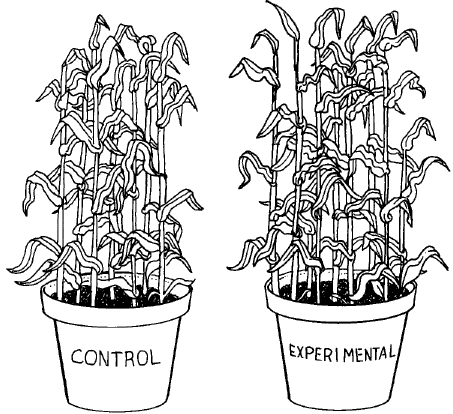
Norway as part of EFTA/EEA = CONTROL to the "EU Political Experiment" for the UK to compare
Take the scaremongering by key figures such as the Confederation of
British Industry (CBI) who claim that three million jobs will be lost if
Britain were to leave.
In 1994 the Confederation of Norwegian
Enterprise similarly predicted the apocalypse if Norway were to reject
membership, claiming 100,000 jobs would be lost (quite terrifying in a
country of just over four million in 1994). This claim could not
have been further from reality as unemployment decreased in Norway
following the referendum and has remained consistently lower than in EU
member states every year since 1994.
The truth is, Norway is not alone or isolated, has thrived as an
independent nation. The Norwegian economy has enjoyed twenty years of
higher growth than the economies of EU Member States and our
international rankings are far higher on a wide range of issues
including gender equality, social welfare, even on happiness.
Norwegians rejected the EU because our nation’s sovereignty and
democracy is so important. Brussels is the antithesis of democratic and
Norwegians, who believe so fundamentally in decisions being made closer
to the people - in the municipalities, in the regions, in our own
government - simply had no desire to be ruled by Brussels.
The campaign to leave the EU in Britain is strikingly similar to Norway.
In Norway, just as in Britain, the pro-EU campaign had the three M’s -
MPs, money and media and stands as the Goliath to the leave campaign's
David. In Norway, we mobilised the public and defeated Goliath.
We pounded the streets, grew our grassroots and took our message to
every community in Norway - the cities, the farms, the valleys.
Cynical attempts by the pro-EU side to convince Britons your country
will fall to its knees if it is not led by an undemocratic unelected
body in Brussels are deceitful.
then there is the above confusion and the above stunted development of Democracy:-
Without organization of information, arguments are short-circuited (either systemic artefact or directed agency) = Stunted and stunting conditions prevail for Democracy
Why?
If you remember or have read: The Political Food Web of Prestige then you'll see that the way our Democracy works is neither Representative (Excessive Representation of vested interest groups at the top of the political food web) nor Democratic (arguments are excluded proactively).
Example:FLEXCIT/The Market Solution brexit plan (with >38,000 downloads) is systematically omitted from reference from researchers and research in the above Political Food Web (Think Tanks, Legacy News-Media, Political Parties and Westminster, Campaign Groups etc). I scour the news and EU/Brexit/Referendum articles and it's consistently not responded to, despite showing the incredibly limited thinking of these actors and their prejudiced thinking and models of understanding.
What?
Is the best representation of THIS systemic process itself, we can abstract from how our democracy fails to function? If you compare all the signings of the above Treaties, look at the photos and tell me what you see...
How?
Can we change our democracy from this failing system? You have a clear choice above all the cacophany and deception:-
Referendum Vote: Remain=
x1 Signature: Will David Cameron Sign the UK up to only HIS version of the UK's story or...
Referendum Vote: Leave=
>51% of the UK's Electorate, "We The People..." will choose our future, for the first time in >40yrs.
Which, do you think represents the path to Real Democratic Franchise of The People? If those "above the line" continue to ignore the ingenuity and source of prosperity in the people themselves, then we can modify our arguments to include this FACT and then argue with even greater certitude in clearing up the "confusion generation" via this method: We promote democracy itself as the argument.
What is the Popular Referendum's ultimate function: Whichever Result that leads to More Democracy. It's as simple as that.
In Joe Haldeman's science-fiction novel "The Forever War" the main character William Mandella is one of Earth's soliders involving in fighting an interstellar war with an alien race. One of the many deep problems and perhaps the deepest, these soldiers experience due to space-travel is "Time Dilation". For a few months spent travelling through space-time, Earth time has passed significantly more "Sol years" relatively. This is another truly strong example of successfully combining Literature and Science . Joe Haldane perfectly captures the emotional detachment and every widening gap and alienation of the protagonists caught in a struggle that bears less and less resemblance between the origins of their struggle and it's now future-present experience. This plausible fictional idea resonates so strongly in part because it reflects such fidelity with the real world experiences Joe Haldaman and his fellow Vietnam Veterans experienced themselves in that historic war on their return "home". I cannot recommend this story enough for it's own merits, both literary and scientific.
In Robert Oulds speech (in above blog), he talks about who and how we are governed in the UK and why this forms the basis for British Exit (Brexit) of Withdrawal from the EU Treaty Structures and concerning the CIB (Campaign For An Independent Britain)
"They've been at the forefront since the 1960's"
It is almost impossible for me to be able to relate back to that time period, to appreciate the length of time that some people have attempted to put forward arguments and constructive criticism concerning the European Economic Community as it was named then (see Scruton's comments on the "old gods vs the new god" in The Road To The European Union and now which is called the European Union (for how much longer?). Much like The Boiling Frog (of the same blogroll name) given enough time the frog undergoes a dramatic change without realizing it.
Irrespective of the full accuracy of the science, as a metaphor it still works. And it also corresponds our thought between "Time Dilation" and our subjective experience of time. In You know, we're just not reaching that guy. it was pointed out that the media exploits or at least implements the understanding of the difference between people engaging with content and people "blanking" such content: Afterall their commercial success depends on such an understanding and you come across such admissions: "Building online experiences" as part of the language:-
"...commercial competition in a market of consumers who can be more
efficiently exploited (aka "monetized") via techniques to create an
emotional reaction. This in turn transforms a mere "event" into an
"experience" to use further technical language from an altogether
different subject domain."
As per the above again, The Road To The European Union, drawing out our perspective of Britain/UK over historic time helped to provide some broad context to how our nation has formed and how democracy has developed equally with conflicts. There the increase in connectivity over space was observed upwards towards United Nations Economic Commission for Europe (UNECE) with it's x56 members compared with the European Unions (x28 of which x19 are EZ) of which all are signatories to the European Economic Area (EEC x31 members) which includes the x3 of the x4 European Free Trade Association (EFTA) with the exception being Switzerland which holds Bi-Lateral Agreements solely with the EU.
EFTA is similarly useful to demonstrate their spatial arrangement with both Britain/UK and with Europe and with the EU. In particular with Iceland and Norway being "Natural Neighbours" to Britain/UK.
However this is a tangent, the focus here is to now look at the "Time Dimension" to our arguments, and our Subjective experience of time as per the above according to how we are governed democratically. Here's a time-line of the Major EU Treaties compared to the General Elections in the UK/Britain from 1945-2015
Comparison: EU Treaties vs UK General Elections Frequency
I've left the accession Treaties from the above graphic. But looking at the General Elections frequency vs European average Frequency:
av. RATIO: 5 Years : 9 Years
I also included the planned New Fiscal Treaty post-2020 pre-2025 and assigned 2022. In any case from the Lisbon Treaty -> New Treaty post-2020 it's still at least 11 years. Our immediate comparison is therefore representative and to consider the pattern this represents to our democracy:-
Less use the above to illustrate:
BLUE = our General Elections periodicity
RED = EU Major Treaties.
We fit in 2:1 ration of General Elections per Major Treaty or wavelength frequency (the graph even provides this approximation with x2 1/2 waves + x1 complete wave, serendipity). Interestingly the EU is actually similar to China's Elections on a 10 year cycle and not surprisingly: The general rule could be that the larger the Entity the more requirement for processing of information from more parts ie population size (EU: 508,191,116 ; China: 1,376,049,000) and complexity of administration scale. This also can be represented in the amplitude or height of the wave.
To avoid over-cooking the "model"; part of the major reason the EU is so poorly understood to not only the public but also politicians and media, due to both it's size but also it's own much longer periodicity and larger "political cogs and gears" turning as we compared it to in: Jean Monnet's "Engrenage": Destination unknown? If the amplitude reflects the size of polical policy powers transferred from member states to the EU in comparison to what we the people are able to vote on more frequently via our General elections then simply arguing in terms of:-
Significance of Policies passed to the EU
Time duration between each major treaty
We have never voted on any of the above Major EU Treaties!
On these principles and they are quantified principles which makes them hold serious practical value, alone the European Union is worth voting to leave, purely in terms of people being in more control of their own policy powers and hence bargaining position with any politicians performing work in politics serving the nation(s), it's people. And we come back to the last time we were able to vote seriously in the 1975 Referendum (as opposed to the European Elections for MEP's to the EU Parliament which have a lower ratio of representation: Electoral Commission Recommended distribution of UK MEP seats)
It is very hard to relate to in my opinion, but very necessary to fully understand also. Our General Elections which hold 5 year cycles are already for a population of ~65m people which ends in either "Red" or "Blue" parties in power feels very disenfranchising as per voter turn-out: General election turnout 1945 – 2015
Policies we vote on as democratic decision-makers is diluted by the EU's "Pooling of Sovereignty" in it's own language to which we do not gain serious voting. Dilution of our representation further increases per ratio of MEP to voter and then again per UK MEP per vote in the EU Parliament and again beyond the Pariament to the Commission level. What we need is to merge the scale of time of democratic participation with the "quantitative deduction" of democratic representation.
Before looking at the quantitative arguments in more detail, the concept of "Time Dilution" needs to be appreciated. The above all shows the huge "Democratic Deficit" of the EU to which Roger Scruton pointed out that for example that Gordon Brown picked from his own Labour Party in government to become our unelected Prime Minister has the power to sign The Lisbon Treaty on behalf of the UK people, alone:-
All this is very important and needs to be accessed quantitatively. However, before that, the question of subjective experience of time needs to be apprehended. Namely a smaller unit of democratic grouping of people (demos) can have a faster periodicity relationship between policy creation, decision and consensus and execution until the next full wave of the process or in usual parlance "cycle" or even "iteration". Not only this but these smaller units will subjectively be involved in the process over shorter time-frames. When we hold major decisions or take important actions are experience of the world intensifies at these moments which transform from "events" to "experiences" which could be emotionally represented as such:-
Our subjective experience of time appreciates it's own kind of "Time Dilation": In an event where forces combine in direction where we don't have to engage or take a decision outside our normal "auto-pilot" state of mind, time flows quickly and less noticeably. However, when we have an emotional engagement via decision or action, the "tension" creates a subjective extension of time as our attention is focused on the significant experience at hand. Absolutely or objectively time is the same but relatively or subjectively it is experienced very differently.
“The age of purely representative democracy is slowly coming to an end.”
The self-evident reasons in which they surround themselves, the Centralization of Power in combination with the trend of Globalization, appears to make this prophesy appear to true. But what we're seeing is that the EU Treaties themselves drivers "Political Uncertainty" and hence in fact are very susceptible to Globalization's rate of change and hence the opposite of what is needed:-
Antifragile: "Some things benefit from shocks; they thrive and grow when exposed to volatility, randomness, disorder, and stressors and love adventure, risk, and uncertainty"
In a sense democracy is "meant" to act like this, in allowing different arguments to compete with each other, where central planning could not possibly prescribe or predict all possibilities. Taleb suggests that democracy allows us to "kick out our elected leaders" and hence in order to change our execution process of decision-making to improve it's performance. Tony Benn said a similar thing:-
Just as people make decisions when they're engaged they can also be limited in their decision-making abilities via increasing the emotional tension via coercion: ensuring people remain in a state of anxiety and loop from anxiety to anxiety leading to indecision, so that the politicians can make their choices for them and deprive them of their true freedoms.
If people are given more information and education, and more opportunities to vote more locally frequently to their own self-interest then democracy itself is flowing not stagnating.
In our decision-making processes as individuals and as people we need
to appreciate that direct participation over a suitable periodicity is
positive to both active engagement and indeed continuous education of
people about politics and their part to play in the nation's
decision-making process. The alternative is the phenomenon that "William Mandella" experiences in the "Forever War":-
"Relativity
means that for every few months' tour of duty centuries have passed on
Earth, isolating the combatants ever more from the world for whose
future they are fighting."