"Yesterday I was thinking about my first meeting
with Alan Sked in 1991 at the house of Eva Taylor, widow of A. J. P.
Taylor, our common supervisor and what came out of that. What a long way
we have come. I claim some credit."
It was The Boiling Frog blog that led me to EUReferendum.com and the variety of useful influences and help in attempting to further expand the scope and improve the quality of political discussion and debate in the UK concerning this subject. I think I came across the blog sometime in early 2013 or perhaps just before. Pete North Politics Blog: Helen Szamuely:
"Helen was a massively influential part of the early eurosceptic movement
long before Ukip became a household name. One of the original
Brexiteers. She was a hugely respected thinker on the right and a well
known voice in conservative circles."
I had not heard of this lady but it brings to mind the many many people who started this movement far beyond my reckoning(some as far back as the late 1960's in the Campaign for an Independent BritainCIB group) and contributed in the right way to it who are not well known but who need to be thanked for their early and essential actions.
On that note, this blog (finally) ends. I aim to start a new a new website and continue what others started:-
John Ashworth has produced another excellent Fisheries booklet... "Seizing The Moment: The Opportunities For UK Fisheries After Brexit" while Scribblings From Seaham has started another website for Real Democracy: Direct Democracy 4 UK "Moving Forward – A Public Consultation." and Lost Leonardo has murmings of starting blogging again...
For current Brexit Research from Dr. RAE North, don't forget to keep checking and reading (and re-reading) The Brexit Monographs at EUReferendum.com as well as the daily blogging.
In the previous blogs, Expectation Setting: The Key To Winning The Referendum we've looked at a critical measure of Brexit arguments right from their genesis and where they fall on the "Uncertainty Spectrum" regarding their possibility for implementation. This applies to both sides of the argument as per Our Once And Future Sovereignty. It should be noted that arguments now are shaped by probability later and where this is taken advantage of is by our ruling class of politicians on both sides of the argument: Große Lüge - The Big Lie of Magic Money.
The Key Criteria to Positive Expectation Setting and Good Communication
This sets our expectations, The Leave Alliance: A Choice With A Plan, the journey our nation agrees to travel along and the destination set. And this depends on everyone having a clear idea of what the rules are, Our Once And Future Sovereignty, and hence what agreements are possible and what the consequences will be and by whom, Our Once And Future Sovereignty, and where those agreements either way will lead to; again this applies as much to Remain as Leave as per EU: From Common Market To EU Constitution. Which if we accept the rules of our present relationship with the EU, as commandeered by our politicians, which is evident in analysing their type of communication with us, Decrypting: What is Babel-17? and which also allows us to probe for what they don't want to communicate to us as per The Columbo Method: Norway; remember Nip a hidden act that damages the community. Then we have to decide: Why? Living Someone Else's Dream or do the hard work and choose our own.
Watching the amusing Little Britain clip above reminds me of the last few decades of the Leave Campaigns dominated by the "eurosceptic aristocracy": Too self-important, too comfortable, too lazy, too well-off to really care about more than the appearance of wanting to forge a future vision, The Leave Alliance: Our Vision: I've had the opportunity to consider the arguments and done the necessary "home-work". With that there's a temptation to become arrogant when you look at just how low in quality the prevailing substitution arguments are; the more prestigious such as John Major or David Cameron, the more the emotion of "disgust" bubbles up. For the general public, struggling to navigate and help themselves understand the arguments, it looks like as previously: Argumentum Ad Infinitum:-
Ant Mills: Infinite loop: Going nowhere
Capturing some of these arguments and this behaviour can be done using online commenting systems such as Reddit uses, which is much more useful than most commentating systems to visibly follow a trail of arguments. Given the latest fashion on Canada FTA as per The Lady In Mouve! from Vote Leave and Boris Johnson, here's a Argument Ant Mill in Action:-
Promisingly Vote Leave's Canada FTA is being seen for what it is: A title and an ending and nothing in between. Amazingly when described as such so simply that so many in the media and politics take it so serious: "The Lady In Mouve! ... The End!" is about as substantial as it gets. But then the people who talk about it such as Boris Johnson get a free pass in the media according to their Prestige:-
Power is being able to talk and be listened to
What is damaging however is where this provides opportunity for smothering productive communication:-
Which Criteria is most effective for people to use to aid their decision-making?
It comes back to the basic proposition, that if the UK were not a member, how many would actually vote to join it? See Norway. Coming to Iceland:-
Sir: In his Notes on 5
March, Charles Moore tells the story of a visit by Sir Winston
Churchill to the Icelandic Parliament, Althingi. Mr Moore says:
Churchill
famously irritated its members by the first half of his sentence and
gratified them with the second half: ‘I come from the mother of
parliaments [pause] to the grandmother of parliaments.'
A
good line, but one that was delivered not by Churchill but by Lord
Newton, who was sent to help the Althingi celebrate its 1,000-year
anniversary in 1930.
Incidentally, our first laws
were spoken rather than written, so the presiding officer had to recite
them when parliament met. This is the origin of the phrase ‘Mr Speaker'.
Björn Bjarnason Kvoslaekur, Iceland
The Althingi is one of the oldest extant parliamentary institutions in the world.Its establishment, as an outdoor assembly or thing held on the plains of Þingvellir ("Thing Fields") from about the year 930 AD,laid the foundation for an independent national existence in Iceland. To begin with, the Althing was a general assembly of the Icelandic Commonwealth, where the country’s most powerful Leaders (goðar) met to decide on legislation and dispense justice.
Then, all free men could attend the assemblies, which were usually the
main social event of the year and drew large crowds of farmers and their
families, parties involved in legal disputes, traders, craftsmen,
storytellers and travellers. Those attending the assembly dwelt in
temporary camps (búðir) during the session. The centre of the gathering was the Lögberg, or Law Rock, a rocky outcrop on which the Lawspeaker (lögsögumaður)
took his seat as the presiding official of the assembly. His
responsibilities included reciting aloud the laws in effect at the time.
It was his duty to proclaim the procedural law of Althing to those
attending the assembly each year.
The basis of the Norwegian society is democracy. Norway has come to
learn how self-governance is the wise foundation of our decentralized,
elongated and scarcely populated country. As a sovereign nation, Norway
can cooperate and trade with other nations.
The Norwegian population has twice voted no to membership of The European Union. Referendums where held both in 1972 and in 1994
. No to the EU
strives to ensure a truly influential democracy, where important decisions are made with an effective democratic control.
No to the EU aims at being a widespread and diverse people’s movement. No to the EU has its own youth organization
(
Ungdom mot EU
)
and student organization
(Studenter mot EU)
.
Policy of the
Nei til EU
:
No to the EU
wants to ensure democracy and Norwegian sovereignty.
No to the EU
wants to ensure a continued Norwegian independence in international politics.
No to the EU
strives for fairness and equality in international trade and
cooperationllaboration, and urges Norway to play an active role on the
global arena in obtaining and ensuring such qualities.
No to the EU
strives for Norwegian natural resources to be administrated by Norwegian authorities and institutions.
No to the EU
promotes a broad international cooperationllaboration, not restricted by the boarders of Europe.
No to the EU
is engaged in women politics and information tasks promoting gender equality.
The parliament in its present form was first constituted at Eidsvoll in 1814, although its origins can be traced back as early as the 9th century to the allting, a type of thing, or common assembly of free men in Germanic societies that would gather at a place called a thingstead and were presided by lawspeakers. The alltings were where legal and political matters were discussed.
Switzerland
Direct (Real) Democracy in Switzerland
In Switzerland, Direct Democracy has a long tradition:
The origins of Direct Democracy can be traced back to the late
the middle ages: archaic forms (assemblies of the electorate discussing
and deciding major political issues) have been practised
in part of the country since the founding of the
Old Swiss Confederacy
in 1291.
The origins of Switzerland's modern system of Direct Democracy
with formalized opinion polls and frequent
referendums
lie in the experimental phase of democracy in the 19th century
when Switzerland was surrounded by monarchies on the European continent
that showed little to none enthusiasm for democracy.
"The
premise on which our movement is based is that democracy means "people
power". The word democracy stems from the Greek word, dēmokratía, comprising two parts: dêmos "people" and kratos "power". Without a demos, there is no democracy. But people without power is not democracy either.
Our current system of government is known as "representative democracy".
That phrase is a misuse of the word democracy. People do not hold
power: that system cannot by definition be a democracy. We seek to
return power to the people. We are concerned with power – who holds it
and under what circumstances and controls, and how to get more of it.
Above all else, we hold to the core principle that in a true democracy
the people must hold the power.
Our objective is to recover power. Our focus is on the acquisition of
power. And once we ourselves, the people, hold the power, we can then
attend to the many problems and injustices that plague modern society.
But without power, there is only protest – and we achieve nothing of any
lasting value. To help us acquire power, we are adopting the original
strategy of the Chartists. Like them, we felt it was vital to frame a
very limited number of achievable demands – six in number. These are
listed below"
Politicians use maechavellian phrases: "Save The Children!" and then over-spend on other areas and not Education Policy... This is the legacy of their communication to people
We do have the BBC: Reality Check: The EU referendum and they're evidently trying to provide lots of information. But it's unstructured, lists that quickly fatigue the brain even if via high-sharing it's connecting "consumers" at high volume: It's still "low-sense-making". A more productive way to make sense and communicate knowledge more effectively:-
BBC: High-Sharing, Low Sense-Making
Looking at the above Nations: Iceland, Norway and Switzerland, it's interesting to consider their own political histories and modes of communication to effect a community and hence to derive decisions and learn from the consequences of those decisions:-
Most people have heard Clay Shirky’s
quote that, “It’s not information overload, it’s filter failure.” The
professor and author has coined terms such as ‘cognitive surplus’ to
explain that we have the mental capacity to do a lot more with our
collective intelligence, but too often, societal barriers inhibit us. We
are too busy with the day-to-day commute, usually in a deluge of noise
from radios, billboards, and news sources, to reflect and consider
bigger issues. Getting paid every two weeks focuses employee attention
on the short term, as do quarterly reports for executives. Filter failure is only part of our challenge to make sense of our
world. Even with good information filters in place, we remain passive
consumers of information. We can share our filtered information, which
many do on social media or over a coffee, but what value are we adding
to it? It takes more time and effort to take our filtered information
and make sense of it. Shirky, once again, says that “Curation solves the
problem of filter failure”. I would say that curation adds a layer of
value, but is still not enough.
Groundhog Day: Six more weeks of Winter or is Spring on the way?
A very popular and very funny and brilliantly created film is the comedy film: Groundhog Day starring Bill Murray and Andie MacDowell. The premise of the film is that Bill Murray for reasons unknown must live the same day over and over again, which is Groundhog Day:-
"Groundhog Day (Canadian French: Jour de la Marmotte; Pennsylvania German: Grundsaudaag, Murmeltiertag) is a traditional holiday celebrated on February 2. According to folklore, if it is cloudy when a groundhog emerges from its burrow on this day, then the spring season will come early; if it is sunny, the groundhog will supposedly see its shadow and retreat back into its den, and winter weather will persist for six more weeks."
It would have been "perfect timing" to have written this yesterday to coincide with February 2nd, but I was busy with The Market Solution: A Growing Solution and the newspapers and interviews and commentary have mostly all landed today on the question of: "EU Reform" and "EU Renegotiation" so that David Cameron can hold the "EU Referendum" and "get it out of the way". That last phrase is I think very telling:-
Holding a Referendum on Cameron's "spin" not on >40yrs x7 Major Treaties is somehow going to resolve the question from now until June 23rd? Looking at below, the failure to serve people more democratically is as much a part of the reason to leave the EU and to not trust the politicians latest promises and their dismissal of the final delivery of a referendum, now that it has been officially offered:-
A Growing Political Debt: Stuffing >40yrs and x7 Major Treaties into Cameron's reform renegotiation for the referendum to "refer to the people"...
Apparently it's "bad for the economy" so needs to be gotten rid of; but very little argument about the ability for a Referendum to capture the minds and imaginations of the electorate and turn out in large numbers to participate in Real (direct) Democracy on a singular and most important political subject.
If people are bored of this referendum in the news, why is that? Is that the fault of the politicians and legacy news-media? The trivialization of a problem to be "gotten out of the way" given it is such a large subject.
We know that a subject becomes boring when:-
Main Priority for "Referral To The People": Education & Time To Think to make good informed and well-reasoned decisions on large subjects.
It's interesting to compare, but if the EURO had had more debate and more open discussion, then a better decision may have been made? So to consider the Referendum as "something to get out of the way" I think is very short-sighted.
Some summaries of this Groundhog Day EU Politics:-
The Boiling Frog provides the most penetrating consideration of the present situation in my opinion: Namely what are the implications for the visible denouement being played out. That is to say: Or is it? And that further is to arrive at a very concrete conclusion: If David Cameron must resort to shadows and spin on the subject of the EU Referendum via EU Reform via EU Renegotiation, then the subject itself is casting too long a shadow over the functional purpose of politics in our political institutions, I would conclude.
Is the sun rising or setting on Political Union underneath EU Treaties for the UK?
Does the EU cast too large a shadow over UK Politics, it's very presence casting too much into shadow and doubt and uncertainty?
What are we to make of David Cameron's slippery and shoddy reform promises?
Pete North has the right of it: Their very behaviour, conduct and dysfunctional politics (their shadow) of our politicians is answer already and answer more than enough, itself.
I suspect The Boiling Frog above is correct. We'll get a relatively poor deal in February, then I think the EU will work it's magic on Migration (Dublin IV?) and with that final flourish Cameron may go for a Summer Referendum to "get it out of the way"; if he and the EU have concluded that a Treaty Political I.O.U Promise for Association Membership in late 2017 is not on the current agenda, for whatever reasons; and that without that his chances diminish irreversibly with time (and the spread of information and public understanding of the subject).
Only such dysfunctional politics could produce a June 23rd Referendum date given all the above and against:-
EC Recommendations
Regional Elections in the UK
Summer holiday season and major sports events
The lack of "fundamental change" once again promised by David Cameron and once again demonstrating he's a serial liar when it comes to the EU.
Again our politicians and media commentators fail to point out how and why this is dysfunctional to even talk up the prospects of an "early referendum". Alternatively it may simply be an exercise to "park" the EU Referendum jitters with complex papers and details until 2017? Either way all we're really doing is chasing after political shadows and making predictions based off such lack of substance!
"On 19th July 1588 Captain Thomas
Fleming in the Golden Hinde, glimpsed the Armada through the
swirling morning mist off the Lizard and raced for Plymouth, Lord
Howard’s home port. Fleming came up the channel into Plymouth with
the afternoon tide to find Sir Francis Drake playing bowls with his
officers on the Ho, high above the harbour. On hearing of Fleming’s
sighting Drake insisted on continuing with the game."
I grew up in this part of the world and hence this story of Sir Francis Drake and The Spanish Armada, captured my imagination very deeply, as a child, and the quote above is ingrained into my memory as more stylish and sophisticated than anything I ever heard the fictional James Bond 007 come up with, irrespective whether or not it is an apocryphal anecdote: It makes sense and serves as an instructive example of "taking action when action can be taken":-
"It is possible that he knew that the tide of the River Tamar in Plymouth was against him, so that he could not get his ships out of Devonport - therefore, he knew that he could finish his game of bowls because his ships were dependent on the tide to move. If the tide was coming in, his ships had to stay tied up. If the tide was going out, then he had the freedom to move his ships into the Channel."
Now if the tide had somehow been the reverse he might have instead said:-
"Time to finish this game and to finish the Spaniards, too."
The former shows his pragmatism and bravery. The latter would merely have shown his potential bravery. I think it's this that makes the quip so fine in meaning as well as providing unspoken interpretations of events eg the tide.
Here people are being asked for the first time in >40yrs: What does Remain in the EU mean? What does Leave the EU mean?
The above ballot paper form asks two questions. But like Sir Francis Drake's quote above, our answers very much depend on the context (is the tide coming in or going out?) when we give our answers.
The big problem I have with the Remain question being asked between now and 2017 is that it is not at the same time as Next Major New EU Treaty. Irrespective of Mr. Cameron's:-
We looked previous at David Cameron's track-record on the EU, in MIND THE (credibility) GAP. He is not "consistent".
"REFORM":-
His x4 Reforms are:-
Economic governance: Securing an explicit recognition
that the euro is not the only currency of the European Union, to ensure
countries outside the eurozone are not disadvantaged. The UK wants
safeguards that it will not have to contribute to eurozone bailouts
Competitiveness: Setting a target for the reduction of the "burden" of excessive regulation and extending the single market
Immigration: Restricting access to in-work and
out-of-work benefits to EU migrants. Specifically, ministers want to
stop those coming to the UK from claiming certain benefits until they
have been resident for four years
Sovereignty: Allowing Britain to opt out from further
political integration. Giving greater powers to national parliaments to
block EU legislation
Has this clarified his position to vote Remain? Well again looking at the BBC's output, gives us an indication:-
Reform doesn't sound very clear by the sounds of it: It sounds much more like political calculation than problem-resolving
In effect "Reform" still means this:-
The Hydra of Complexity: Voters will not know what they are voting for: "A leap in the dark" = "Reform"
Here we see high magnitude, high orders of multiple intentionality and uncertainty concernign the EUROZONE required changes. This is effectively what the EU is transforming towards in the next major EU Treaty.
We also see confusion in the role of the Legacy News-Media, for example the BBC:-
"But then the rot set in. According to website Leave HQ,
what followed about the boiler-maker and Norway’s involvement with EU
rules and the single market was ‘a pack of lies’, essentially because it
most certainly does have influence, through its participation in the
European Economic Area (EEA) and membership of EFTA (the European Free
Trade Association)."
Tommy R's blog Dismantling Britain Stronger in Europe's Leaflet showing that the Anti-Brexit case is being made by the "Remain" Campaign group not the case for Pro-EU (see above). This type of campaigning is increasing confusion and complexity.
Is proliferating, and hence increasing the "Poltitical Plausibility Scope" into ever greater and wider implausible scenarios away from actual limits of political possibility that delimit the argument between "Remain" and "Leave":-
So, if we look at all the above, the hope for Real (direct) Democracy: Hiding in Plain Sight; feels as distant as it ever did when we joined the EEC back in 1972 before a Popular Referendum! However, we can remove an enormous source of the confusion:-
Edward Heath signs the United Kingdom's Treaty of Accession (Brussels, 22 January 1972)
The signing of the Treaty of Maastricht took place in Maastricht, Netherlands on 7 February 1992
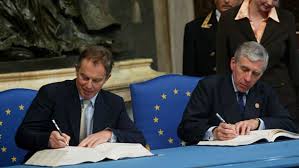
Tony Blair signing The EU Constitution Treaty 29th October, 2004
Gordon Brown signs The Lisbon Treaty 13th December, 2007
Recently the role of the Media in propagating state-sanctioned or planted propaganda was looked it: Journalism: Garbage In Garbage Out (GIGO)
The logic is simple in the Legacy News-Media:-
Garbage Input OR Garbage Model = Garbage Public Information
However the Legacy News-Media is in both cases:-
Garbage Input AND Garbage Model = Garbage Public Information
If you look at the Legacy-News Media reports around the time of the above Treaties, you'll see more or less the same pattern of amorphous information you see today in the build-up to the EU Referendum: Remain or Leave question:-
Failure To Process: Legacy News-Media piped cacophany and AMORPHOUS failure of argument development => Retardation of "national conversation"
If we are blinded by the Legacy News-Media, by the MP's (and MEP's) and by the Money-Holders in our society,
The upcoming referendum on EU membership in Britain is being watched with great interest in Norway.
It is a debate we Norwegians have been having for decades and the
situation in
Britain bears remarkable similarity to what happened in our
own referendum. Norwegians rejected
joining the EU in 1972 and again in 1994 and Eurosceptic sentiment has
soared in recent years, so much so that in the past decade every single
opinion poll has found a majority opposed to joining. The most recent
polling found 72 per cent of Norwegians opposed joining the EU.
Despite our Prime Minister and her party still
dreaming of Norway to join, Norwegians are happier outside the EU. The
mood is such that even 61 per cent of our Prime Minister’s own voters disagree with her position on Brussels. The arguments the pro-EU campaign in Britain have been pushing are only too familiar.
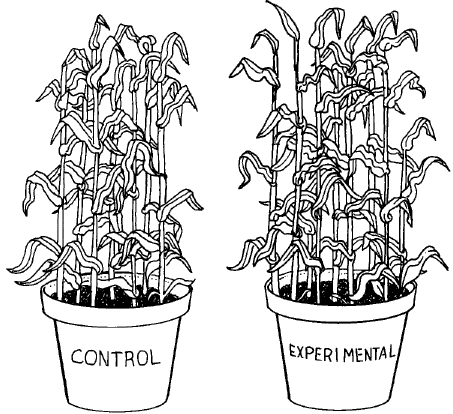
Norway as part of EFTA/EEA = CONTROL to the "EU Political Experiment" for the UK to compare
Take the scaremongering by key figures such as the Confederation of
British Industry (CBI) who claim that three million jobs will be lost if
Britain were to leave.
In 1994 the Confederation of Norwegian
Enterprise similarly predicted the apocalypse if Norway were to reject
membership, claiming 100,000 jobs would be lost (quite terrifying in a
country of just over four million in 1994). This claim could not
have been further from reality as unemployment decreased in Norway
following the referendum and has remained consistently lower than in EU
member states every year since 1994.
The truth is, Norway is not alone or isolated, has thrived as an
independent nation. The Norwegian economy has enjoyed twenty years of
higher growth than the economies of EU Member States and our
international rankings are far higher on a wide range of issues
including gender equality, social welfare, even on happiness.
Norwegians rejected the EU because our nation’s sovereignty and
democracy is so important. Brussels is the antithesis of democratic and
Norwegians, who believe so fundamentally in decisions being made closer
to the people - in the municipalities, in the regions, in our own
government - simply had no desire to be ruled by Brussels.
The campaign to leave the EU in Britain is strikingly similar to Norway.
In Norway, just as in Britain, the pro-EU campaign had the three M’s -
MPs, money and media and stands as the Goliath to the leave campaign's
David. In Norway, we mobilised the public and defeated Goliath.
We pounded the streets, grew our grassroots and took our message to
every community in Norway - the cities, the farms, the valleys.
Cynical attempts by the pro-EU side to convince Britons your country
will fall to its knees if it is not led by an undemocratic unelected
body in Brussels are deceitful.
then there is the above confusion and the above stunted development of Democracy:-
Without organization of information, arguments are short-circuited (either systemic artefact or directed agency) = Stunted and stunting conditions prevail for Democracy
Why?
If you remember or have read: The Political Food Web of Prestige then you'll see that the way our Democracy works is neither Representative (Excessive Representation of vested interest groups at the top of the political food web) nor Democratic (arguments are excluded proactively).
Example:FLEXCIT/The Market Solution brexit plan (with >38,000 downloads) is systematically omitted from reference from researchers and research in the above Political Food Web (Think Tanks, Legacy News-Media, Political Parties and Westminster, Campaign Groups etc). I scour the news and EU/Brexit/Referendum articles and it's consistently not responded to, despite showing the incredibly limited thinking of these actors and their prejudiced thinking and models of understanding.
What?
Is the best representation of THIS systemic process itself, we can abstract from how our democracy fails to function? If you compare all the signings of the above Treaties, look at the photos and tell me what you see...
How?
Can we change our democracy from this failing system? You have a clear choice above all the cacophany and deception:-
Referendum Vote: Remain=
x1 Signature: Will David Cameron Sign the UK up to only HIS version of the UK's story or...
Referendum Vote: Leave=
>51% of the UK's Electorate, "We The People..." will choose our future, for the first time in >40yrs.
Which, do you think represents the path to Real Democratic Franchise of The People? If those "above the line" continue to ignore the ingenuity and source of prosperity in the people themselves, then we can modify our arguments to include this FACT and then argue with even greater certitude in clearing up the "confusion generation" via this method: We promote democracy itself as the argument.
What is the Popular Referendum's ultimate function: Whichever Result that leads to More Democracy. It's as simple as that.
One of the best books I've ever come across and gladly though carefully share, here, is Mihaly Csikszentmihalyi 's "Flow: The psychology of optimal experience". Effectively or colloquially, the graph above represents the balance between a person's skill at an activity or task and the challenge level of applied skill to this task. Invariably the conditions for "being in the zone" or as per sport "on fire" or "in a hot streak" etc etc require conditions such as clear problem and goal definitions and balance between the two variables. The conditions to reach FLOW itself are a balance between the two where: Challenge = Skill, but tend to emerge where skill is higher and challenge is higher to match that skill. Variations around this eg Skill >> Challange and you have Relaxation, where Challenge >> Skill you have Anxiety and where both are very low you have Apathy. We've already discussed how negative and deleterious too much Anxiety is to experience and how it reduces our decision-making capacity as per Our Government: "Ifs, Buts, Maybes" and again in Argumentum Ad Infinitum and hence perpetuated on a national scale in the Legacy News-Media in Understanding The Mountains of Madness.
'High Skill : Challenge' ratio => experience of FLOW
This is all incredibly destructive behaviour to peoples' experience of politics: It accounts in my opinion for the "Apathy", "Boredom" and on ocassion the over-dose by design or ineptness of "Anxiety" the politicians inject into the national discourse in order that they may be on hand to relieve the pain later; having prolonged it, in the first place. These destroy our positive feedback-loops as per Pattern Recognition which is depend on Memory input as compared in Eurosceptic "Amnesia" vs Brexiteer "Total Memory Recall" .
What has to be done is to come back to the behaviour of our politicians, the ones who are supposed to represent the people, the "professionals"; the 650 MP's in our Houses of Parliament at Westminster and our 73 MEP's in the European Parliament in Brussels and Strasbourg. Quoting Mihaly Csikszentmihalyi in FLOW, p.190-191:
Britain's present Representative Democracy: Predictable & Poor Scaling of Democracy
"A person is part of a family or a friendship to the extent he invests psychic energy in goals shared with other people. In the same way, one can belong to larger interpersonal systems by subscribing to the aspirations of a community, an ethnic group, a political party, or a nation. In ancient Greek usage, "politics" referred to whatever involved people in affairs that went beyond personal and family welfare. In this broad sense, politics can be one of the most enjoyable and most complex activities available to the individual, for the larger the social arena one moves in, the greater the challenge it presents. A person can deal with very intricate problems in solitude, and family and friends can take up a lot of attention. But trying to optimize the goals of unrelated individuals involves a lot of complexities an order of magnitude higher. If we consider only material consequences, we might regard selfish politicians as canny because they try to achieve wealth and power for themselves. But if we accept the fact that optimal experience is what gives real value to life, then we must conclude that politicians who strive to realize the common good are actually smarter, because they are taking on the higher challenges, and thus have a better chance to experience real enjoyment. The concept of flow is useful not only in helping individuals improve the quality of their lives, but also in pointing out how public action should be directed. Perhaps the most powerful effect flow theory could ahve in the public sector is in providing a blueprint for how institutions may be reformed so as to make them more conducive to optimal experience. A community should be judged good not because it is technologically advanced, or swimming in material riches; it is good if it offers people a chance to enjoy as many aspects of their lives as possible, while allowing them to develop their potential in the pursuit of ever greater challenges. But no social change can come about until the consciousness of individuals is changed first... those who try to make life better for for everyone without having learned to control their own lives first usually end up making things worse all around."
Rueda de Casino: A Cuban Communal Dance - conducive to social Flow
In Of Democracy and Time Dilation the "measurement" of time on the quality of our politics and hence our decision-making was considered and very briefly described or "looked at". The ratio of years of participation, the increase in population from about 32 million to 65 million from around 1901-2015 and hence the dilution of representation, along with the representation of more of our powers in the EU Parliament and even lower representation (both turn-out and ratio) eg 1:1 million constituents more or less and the general decline in voter engagement ie General Elections turn-out. We also looked at some of the arithmetic of the Referendum itself in via The Boiling Frog: Frog Fractions: EU Referendum: 51% and further in Understanding The Mountains of Madness that describes the adoption of the politicians' approach to "guiding the public" towards the middle Green colour in the spectrum via the Legacy News-Media blanket coverage: Based on the above Apathy-Worry-Anxiety dynamic above.
What we can learn from the Flow Theory is that Time, Definition of Challenge, Skill, Internal Motivation are all conducive to improving the quality of experience; and when applied to our politics this is very much what is required via a change to encourage these parameters, for example via greater Real Democracy with increased connections to representation such as The Harrogate Agenda provides the conditions for:-
Reducing the layers of abstraction in our politics and reconnecting people
Before I became personally involved and interested in politics, I remember one great holiday I spent with my brother who was living in France. We were in the French South Western region of the Pays Basque in the town of Biarritz (excellent waves) and decided to cycle across the border into Spain, The Basque Country (Euskadi). It was an amazing sense of freedom cycling across the border into a new foreign land (where suddenly my brother's decent-enough French was no-longer understood and I could leap "into my own element" and use my "very-beginner's Spanish" (just!)). On our way towards San Sebastián we decided to veer off course and take some refreshments in a small town and stumbled upon a scene such as (although smaller) this:-
"Some kinda, god-damn town meeting going on..."
Anyway, it was a lot smaller than the above, but there were speeches, brass bands and plenty of people congregated and there was "controlled energy". We had a fine tapas for our "pit-stop" but the impression of that small town square meeting for the Basque "independence and autonomy" always stayed with me, seeing with my own eyes an example of "active real democracy". And I still admire that commitment, particularly when it reminded me of a geography documentary I saw a long time ago:-
The Mondragon Experiment (BBC Documentary, Horizon, 1980)
An experiment in "Worker participation" in Mondragon, a small-town in North-East Spain in The Basque Country. One of the things this idea of attempting to "re-engage people with meaningful work" reminds of:-
"Lack of experience diminishes our power of taking a comprehensive view of the admitted facts. Hence those who dwell in intimate association with nature and its phenomena are more able to lay down principles such as to admit of a wide and coherent development; while those whom devotion to abstract discussions has rendered unobservant of facts are too ready to dogmatize on the basis of a few observations" ~ Aristotle
Recently the EU Referendum has been looked at and the communication has been simplified at the same time as referencing the source material FLEXCIT, The Great Deception and a myriad of other sources of information. We can think of the EU Referendum as a useful and popular exercise in The Life Changing Magic of Tidying Up and in Strange Trails we looked at the sadness and sorrow of people who expend their valuable "psychic energy" (catch-all) only to be let down by the politicians on both sides of the Referendum Question; because the intellectual foundations were not soundly laid as they should have been by our wretched politicians (The knight 'N Knave) (as per Dr. RAE North) were not laid (ie educating and "skilling-up" the people in understanding the politics):-
The product of the politicians neglect of educating people: Anxiety + Apathy => Sadness from a lack of understanding the challenge.
In Pub Signs the attempt was made to provide a visual indication of communication of the Central Point Argument of the EU Referendum as explained in Argument Abstraction.
We'll be offered rich pickings of "Turkish Delight! Turkish Delight!" but it is a promise of false riches based off the above dynamic without resolving this intrinsic self-made political malaise which are politicians are not in the business of reforming the public anxiety-apathy and nor is the legacy media with their worry default of "Bad News". It ties into given the EU Referendum is the first popular referendum in >40 years: The Harrogate Agenda:-
The premise on which our movement is based is that democracy means "people power". The word democracy stems from the Greek word, dēmokratía, comprising two parts: dêmos "people" and kratos "power". Without a demos, there is no democracy. But people without power is not democracy either.
Our current system of government is known as "representative democracy". That phrase is a misuse of the word democracy. People do not hold power: that system cannot by definition be a democracy. We seek to return power to the people. We are concerned with power – who holds it and under what circumstances and controls, and how to get more of it. Above all else, we hold to the core principle that in a true democracy the people must hold the power.
Our objective is to recover power. Our focus is on the acquisition of power. And once we ourselves, the people, hold the power, we can then attend to the many problems and injustices that plague modern society. But without power, there is only protest – and we achieve nothing of any lasting value.
FLEXCIT, the latest version is available from EUReferendum.com. The challenge is high, but if you choose to download it and increase "your skill and understanding" you might find politics is a much more rewarding use of your time and energy... and... as importantly... of your friends and family's too.
I'm off to finally get a printed version from the local print shop and hope to show plenty of people this great work for the people.